The short answer
- Denim starts as cotton yarn; the lengthwise yarns are dyed with indigo and woven with undyed yarns into a twill.
- In a factory, many layers of denim are cut at once from patterns graded into sizes.
- Pieces are sewn with strong seams and topstitching, reinforced with rivets and bar tacks, then washed and finished.
- Made to measure changes the cutting: one pair is cut from one person's measurements, after the numbers are checked.
Jeans look simple, but a pair passes through spinning, dyeing, weaving, cutting, sewing and finishing before it reaches you. Most of those steps are the same whether the jeans are made by the thousand or one at a time. The big difference is where the size comes from.
1. From cotton to denim
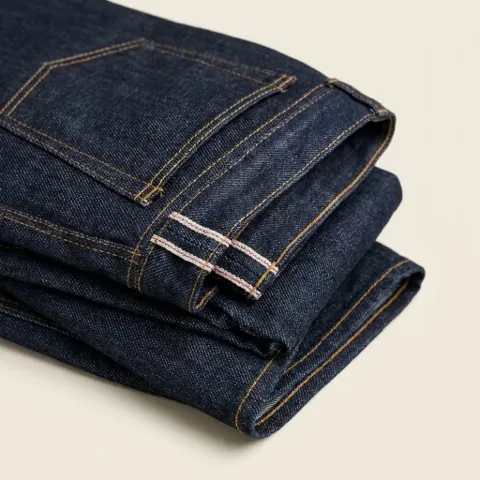
Cotton fiber is spun into yarn. For classic blue denim, the lengthwise (warp) yarns are dyed with indigo, which sits on the outside of the yarn and leaves the core paler; that's why denim fades as it's worn. The warp is woven with undyed crosswise (weft) yarns into a twill, the diagonal weave that makes denim strong and gives the inside its lighter color. More in how denim gets its color.
Denim can be woven on wide modern looms or on narrow shuttle looms that leave a finished edge called selvedge; see what is selvedge denim. Stretch denim adds a little elastane to the cotton (stretch vs rigid denim), and the fabric's weight is given in ounces (denim weight guide).
2. Pattern and cutting
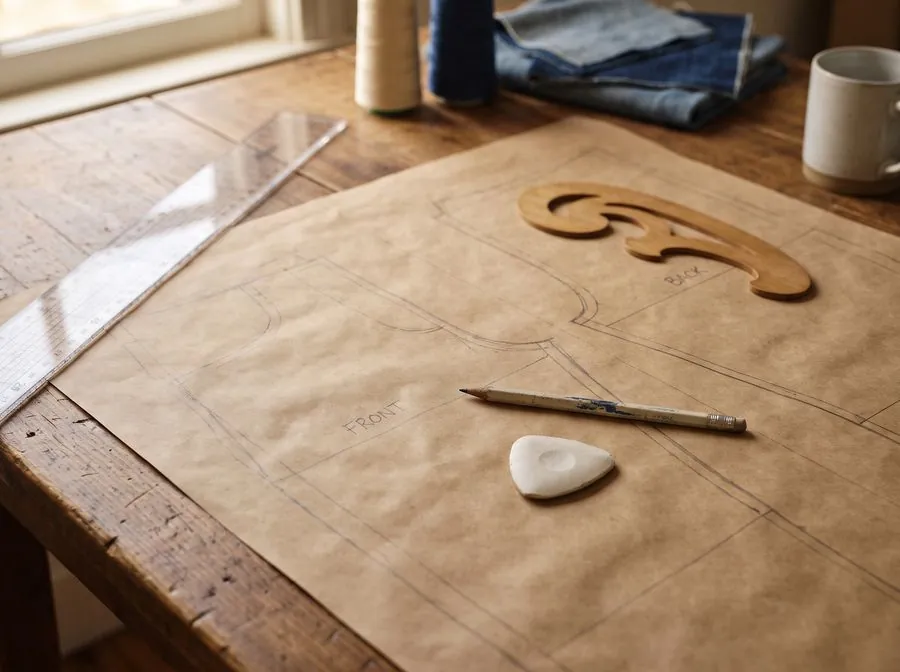
A pair of jeans is made from flat pieces: two fronts, two backs, a back yoke, pockets, a waistband and belt loops. In a factory, the pattern for one base size is graded up and down into a size range, then dozens of layers of denim are stacked and cut at once. That's efficient, but every pair in a size comes out the same shape, so the size has to match your body for the jeans to fit.
When jeans are made to measure, one pair is cut from one person's numbers: waist, hips, thigh and inseam at least. That's where the fit comes from, and it's why store sizes differ so much between brands while a made-to-measure pair doesn't need a size at all.
3. Sewing
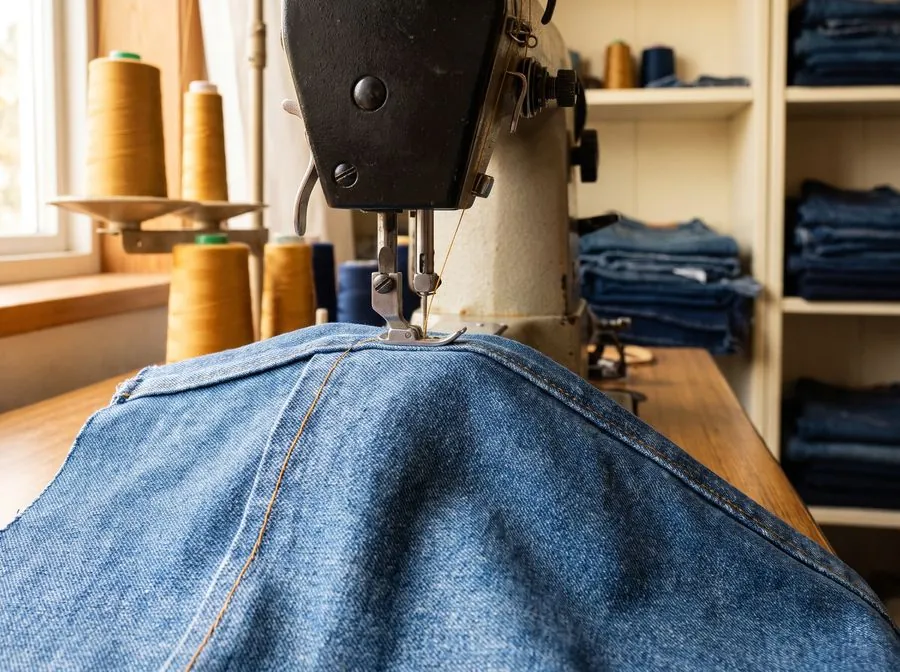
Jeans are sewn in a set order: pockets onto the fronts and backs, the yoke onto the back, then the seams that join the legs, the fly, the waistband and belt loops. Strong seams such as flat-felled seams hide the raw edges inside, contrast topstitching outlines the pockets and seams (see thread colors and topstitching), and rivets and bar tacks reinforce the corners that take the most strain. The fly is either a zip or a row of buttons (button fly vs zip fly).
4. Washing and finishing
Most jeans are washed after sewing to soften the denim and set the color: a light rinse for dark indigo, longer washes and finishing for mid and light shades, and techniques such as whiskering or abrasion for a worn look. Raw denim skips this step and is sold unwashed. See denim washes explained and the distressed jeans guide.
5. Hemming and checking
Last comes the hem (regular, raw, cuffed or chain-stitch; see chain-stitch hems) and a final check before packing.
Factory jeans vs made-to-measure jeans
| Step | Mass-produced | Made to measure |
|---|---|---|
| Size | Graded size range | Your own measurements |
| Cutting | Many layers at once | One pair at a time |
| Fabric and wash | Fixed per style | Chosen per pair |
| Details | Fixed per style | Chosen: fly, hem, thread and more |
| Time | Made in advance, in stock | Made after you order |
| If it doesn't fit | Try another size | Remake or alteration under a fit guarantee |
How a Jeanszilla pair is made
You choose the style, denim, wash and details, and give us your measurements: copy a pair you like or measure yourself. Within 1 working day a pattern maker checks the numbers against each other and emails you before cutting if anything looks unusual. Your pair is then cut and sewn in our own workshop in 10–15 working days (rush: 5–7) and sent by express tracked courier in 3–7 working days, with US duties included. The full timeline is in what happens after you order.
Start with men's, women's or kids' styles.
Questions
How long does it take to make a pair of jeans?
Sewing itself is a small part of the time; most of it is cutting, sewing in sequence, finishing and checking. A made-to-order pair from Jeanszilla takes 10–15 working days to make, or 5–7 with rush.
Why is denim blue on the outside and white inside?
Only the lengthwise yarns are dyed with indigo, and the twill weave puts most of them on the outside. The undyed crosswise yarns show more on the inside.
What are the rivets on jeans for?
They reinforce the corners of the pockets, where the most strain falls, so the seams don't pull apart.
What's the difference between made-to-measure and off-the-rack jeans?
Off-the-rack jeans are cut in a size range and you pick the closest size. Made-to-measure jeans are cut from your own measurements, one pair at a time.