The short answer
- Denim weight is quoted in ounces per square yard of fabric, not the weight of the finished jeans.
- Roughly: under 12 oz is light, 12–16 oz is mid, over 16 oz is heavy. These are conventions, not a standard.
- Lighter denim is cooler and drapes; heavier denim holds its shape, takes longer to soften and suits cooler weather.
- Weight is only one factor. Stretch content changes the feel as much as ounces do.
When a label says "13 oz denim", it isn't telling you what the jeans weigh. It's telling you how heavy one square yard of the cloth is. That single number predicts a lot: how warm the jeans are, how stiff they feel on day one, how a wide leg hangs and how quickly the fabric softens. It predicts less than people think about quality. Here's how to read it.
What the ounce number measures
Denim weight is ounces per square yard (oz/yd²). One ounce per square yard is about 33.9 grams per square metre, so a 13 oz denim is roughly 440 gsm if you're comparing with a European label. A pair of adult jeans uses well over a square yard of fabric, which is why the finished jeans weigh far more than the number on the tag.
The bands most people use are under 12 oz for lightweight, 12 to 16 oz for midweight and over 16 oz for heavyweight. As the Denimhunters denim wiki puts it, these are conventions rather than rules: there is no global standard, and a maker used to light stretch fabrics may call 14 oz heavy.
The weight ladder: six fabrics side by side
These are the six adult fabrics you can choose for a Jeanszilla pair, from lightest to heaviest. The feel and season columns are general guidance for denim of that weight; your own climate and how warm you run matter too.
| Fabric | Weight | Feel on day one | Best seasons | Drape |
|---|---|---|---|---|
| Summer Lightweight | 8.5 oz | Soft, thin, flexible | Hot summers, warm climates | Fluid; moves with you |
| Power Stretch | 10 oz, 4% elastane | Soft, noticeably stretchy | All year | Follows the body closely |
| Comfort Stretch | 11 oz, 2% elastane | Classic denim with a little give | All year | Balanced |
| Organic Cotton Stretch | 11.5 oz (+$15) | Classic denim with some give | All year | Balanced |
| Classic Rigid | 13 oz, 100% cotton | Firm, structured | Spring, autumn, winter | Holds its own shape |
| Japanese-style Selvedge | 14 oz raw (+$40) | Stiff at first, softens with wear | Cool months | Crisp; creases into your shape |
Notice that the two heaviest are also the two with no listed stretch. Weight and stretch work together: an 11 oz stretch fabric and a 13 oz rigid one feel further apart than the 2 oz gap suggests. Our stretch vs rigid guide covers the elastane side.
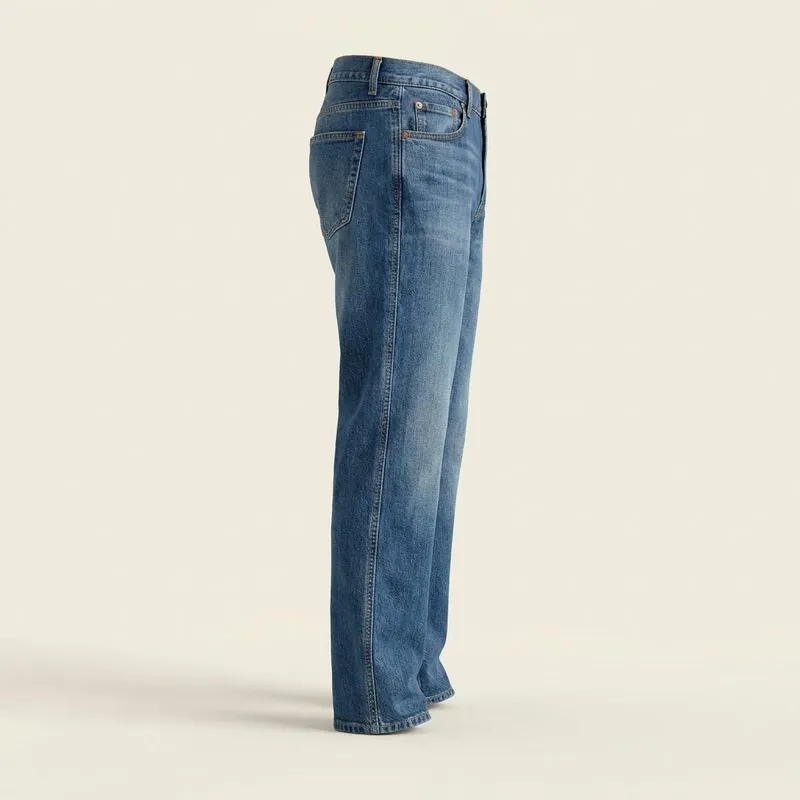
How weight changes the shape of a leg
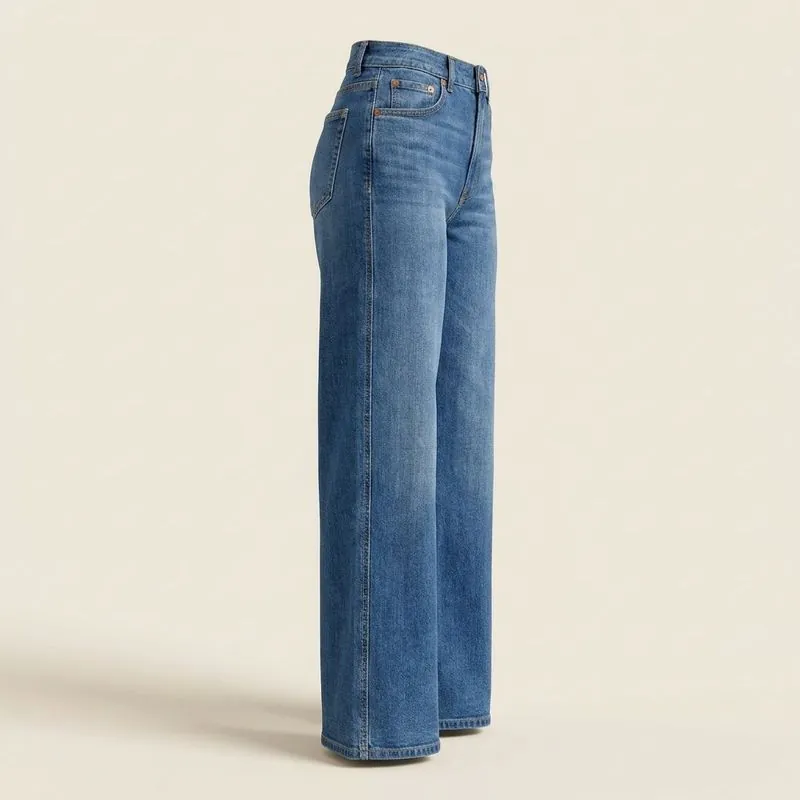
Heavier denim stands away from the body and keeps the shape the pattern gave it. Lighter denim falls closer and moves more. That matters most on the roomier cuts:
- Wide leg. Our women's wide leg is cut at a 24" knee and 24" leg opening (measured around, size 28). In 13 oz rigid it hangs like a column; in 8.5 oz it swings as you walk. Both are good; they're different looks. See women's wide-leg jeans.
- Barrel. The barrel's curve (24" at the knee, in to 14.5" at the ankle) relies on fabric that holds its form, so a rigid or comfort-stretch fabric shows the shape best. See barrel jeans.
- Straight and relaxed. Heavier fabric gives a clean, vertical line and fewer wrinkles at the knee. Lighter fabric is cooler but shows more creasing. See men's straight jeans.
- Skinny and athletic taper. Close cuts lean on stretch more than weight. Power Stretch at 10 oz is the usual pick.
A quick decision rule
Answer three questions and you'll land on a sensible weight:
- How hot does it get where you'll wear them? Regular days above about 80°F point to Summer Lightweight; mild or cool weather opens up everything else.
- How close is the fit? Close fits want stretch (10–11.5 oz). Roomy fits can carry rigid weight comfortably.
- How patient are you? 13 oz rigid and 14 oz raw selvedge are firm at first and soften over weeks. If you want comfort from the first wear, stay at 11.5 oz or below.
When heavier is not better
- Heat. A 14 oz raw pair in a humid summer is a commitment, not a pleasure.
- Close fits in rigid fabric. Heavy rigid denim can't stretch over your thigh when you sit, so it needs more room built in, which works against a close look.
- Bulk at the hem. Thick denim makes a chunkier cuff and stacks more at the ankle. If you like a crisp single fold, lighter fabric does it more neatly.
- Durability is not just weight. Heavier cloth of the same construction tends to resist abrasion better, but fit matters too: a pair that's too tight in the thigh wears through faster whatever it weighs.
Kids' pairs come in two fabrics of their own: Soft Stretch 10 oz with 2% elastane and Classic Rigid 12 oz.
Or browse men's styles. Next read: how to stay cool in jeans and raw denim shrinkage and break-in.
Weight is one choice; fiber is another: organic cotton denim, explained.
Questions
Is 14 oz denim heavy?
It's at the heavier end of midweight. Most people find it stiff at first and warm, and it softens with a few weeks of wear. Truly heavyweight denim starts above about 16 oz.
What denim weight is best for everyday jeans?
For most people, something between 10 and 13 oz. Choose stretch at 10–11.5 oz if you like a closer fit or instant comfort, and 13 oz rigid if you want structure.
Does denim weight change after washing?
The fabric can tighten slightly if it shrinks, but the label weight refers to the fabric as sold. The bigger change you'll notice after washing is softness, not weight.
Is 8.5 oz denim too thin?
Not for warm weather. It's thinner and cooler, and it drapes more, so it shows creases more readily. Choose it for summer rather than as your only pair.
Does heavier denim last longer?
Often, if everything else is equal. But fit, stretch content and how you wash the jeans affect lifespan as much as weight does.