The short answer
- Indigo doesn't dissolve in water, so it's chemically reduced to a soluble form, applied, then turned blue again by air.
- Yarn is dipped many times, building blue on the outside and leaving a pale core. That's why denim fades.
- Only the lengthwise (warp) yarns are usually dyed. The weave puts them on the face, so the inside looks paler.
- Fades appear where the surface wears: thighs, knees, pockets and creases.
Most dyes soak into a fiber and stay there. Indigo doesn't, and that stubbornness is the whole reason jeans look the way they do. It's why new denim is so deep, why the inside is lighter, and why your jeans slowly become a map of how you sit, walk and carry your phone.
Step 1: making indigo dissolve
Blue indigo won't dissolve in water, so it can't dye cotton as it is. Dyers chemically reduce it to a soluble form often called leuco-indigo, which is a yellow-green color, not blue. Yarn is dipped into this bath, then lifted into the air. As oxygen reaches it, the dye oxidises back into insoluble blue indigo, now trapped on the yarn (Fibre2Fashion: indigo dyeing overview). That green-to-blue change in seconds is the moment most people remember from a dye house.
Step 2: layer after layer
One dip gives a pale blue. To reach denim's depth, yarn passes through a series of dye baths, oxidising in the air between each. Each dip adds a thin shell of color on the outside of the yarn, and the core stays pale. This is called ring dyeing. When the surface wears away, the lighter core shows through, and that's a fade.
Rope dyeing vs slasher dyeing
| Rope dyeing | Slasher (sheet) dyeing | |
|---|---|---|
| How yarn travels | Twisted into thick ropes of many yarns | Spread flat as one wide sheet |
| Strength | Very even color across the fabric | Shorter runs, simpler set-up |
| Extra step | Ropes must be opened out and re-beamed before weaving | Sized and beamed in the same line |
| Post-dye washing water* | About 13–15 L per kg on average | About 7–12 L per kg on average |
*Averages from an Indigo Council study by the Transformers Foundation with seven mills, reported by FashionUnited (2025). Both methods are widely used, and many mills run both.
Step 3: the weave hides the white
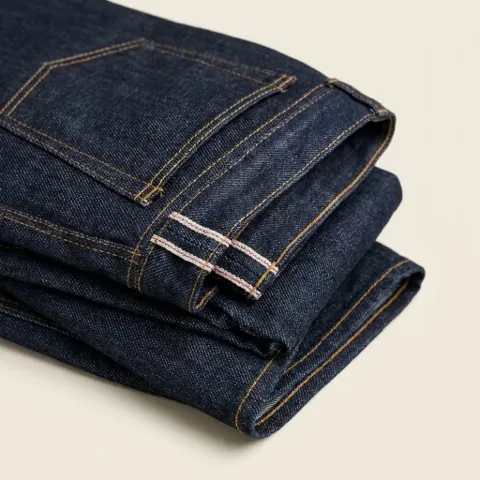
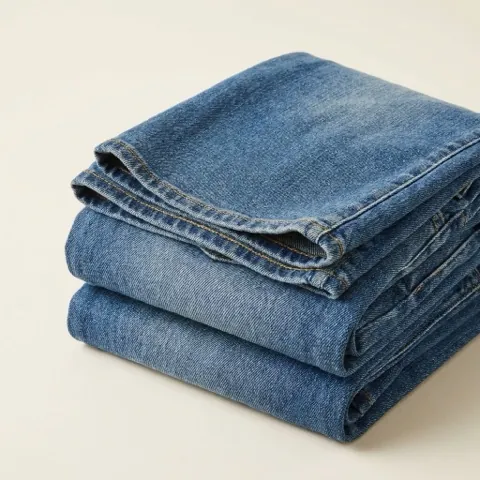
Denim is a twill, the weave that makes those fine diagonal lines. Traditionally only the lengthwise warp yarns are dyed blue and the crosswise weft stays undyed. In the common three-over-one twill, the warp floats over three weft yarns at a time, so blue dominates the outside and white dominates the inside. Turn any classic pair inside out and you'll see it (Heddels: why the inside of jeans is a different color).
A very short history of the blue
For centuries indigo came from plants, grown and fermented in India, West Africa, the Americas and Japan. Chemists worked for decades on a synthetic version, and BASF brought synthetic indigo to market in 1897 (BASF history). Synthetic indigo is the same molecule and is now what almost all denim is dyed with. For how the dyed yarn becomes a pair of jeans, see how denim jeans are made.
Why jeans fade where you move
- Front thighs and knees: constant friction from walking and sitting.
- Hip creases (whiskers): folds that form when you sit, rubbed on their high points.
- Behind the knee (honeycombs): folds from bending, especially on fitted legs.
- Pockets: your phone, wallet and keys wear their outlines into the cloth.
- Hems and seams: raised edges catch first.
Raw denim records all of this clearly, because no factory wash has softened the contrast. Read raw denim shrinkage and break-in if that appeals. Factory distressing recreates the same marks on purpose; see the distressed jeans guide.
What this means when you choose
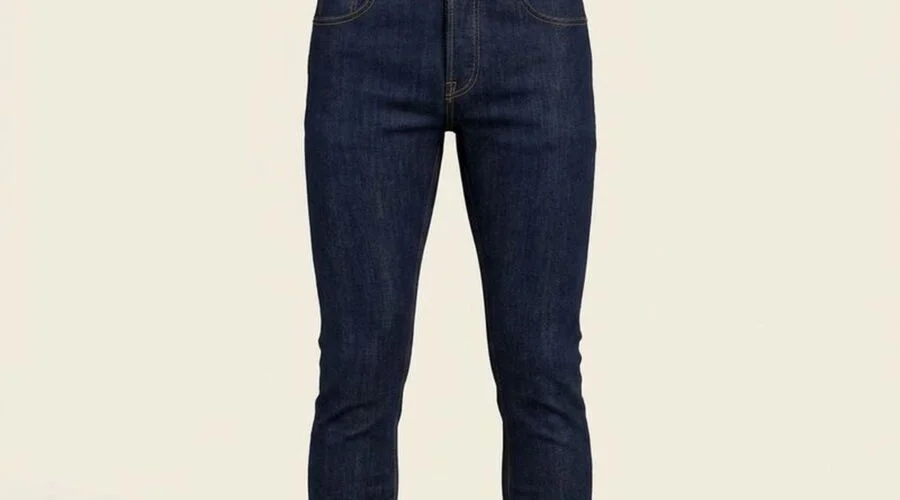
- Want fades that are yours? Choose raw indigo.
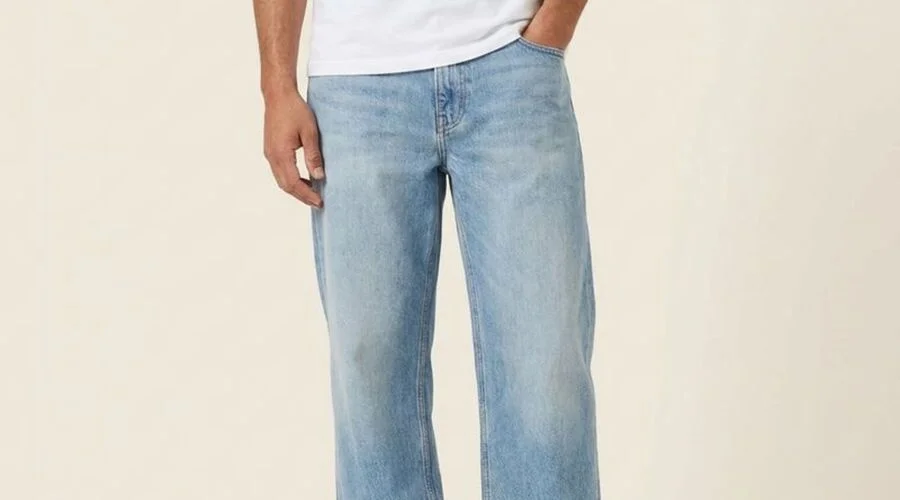
- Want color that stays put? Choose a light wash, which has already done most of its fading.
- Want something other than blue? Black, grey and ecru use different dyes or none, and age differently. Compare them in denim washes explained.
Or browse women's styles.
Questions
Why is the inside of my jeans lighter?
Usually only the lengthwise yarns are dyed. Denim's twill weave puts those blue yarns on the outside and the undyed crosswise yarns on the inside.
Why do jeans fade but other clothes don't?
Indigo sits mostly on the outside of each yarn rather than soaking through. Wear and washing remove that outer layer and expose the paler core.
Is natural indigo better than synthetic?
They're the same molecule. Differences in color come mostly from how the dye is applied and the yarn, not where the indigo came from.
What is ring-dyed denim?
Yarn dyed in many quick dips so the color forms a ring around a pale core. It's the reason denim fades with contrast.
Does black denim use indigo?
Usually not, or not only. Black denim is typically dyed with other dyes, sometimes over indigo, which is why it fades toward grey rather than blue.