
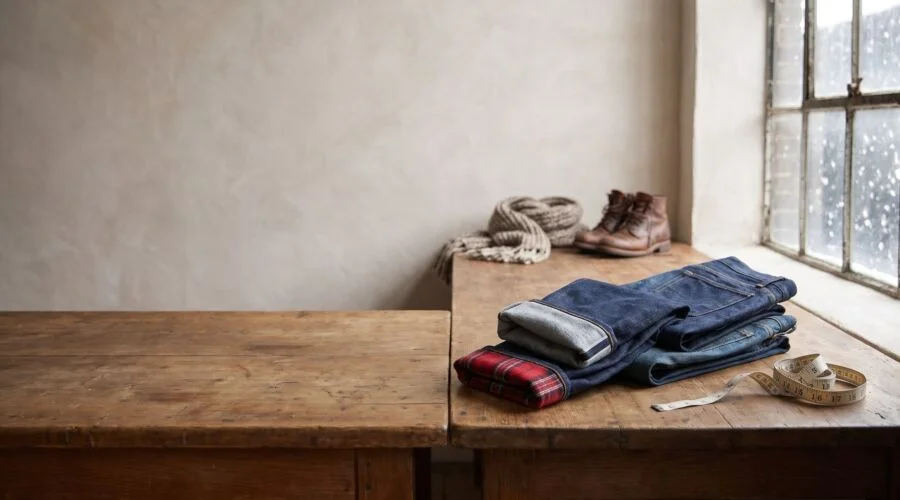
The short answer
- Heavier denim (13 oz or more) is the simplest upgrade: it's thicker, so it blocks more wind than a light pair.
- Leave room. Jeans that are tight against your legs squeeze out the air that helps keep you warm, and leave no space for layers.
- Long underwear or thermal leggings under jeans is the most flexible option, because you can take it off when you go indoors.
- Fleece- or flannel-lined jeans put the layer inside the denim. They are worth it if you're outside a lot, and not worth it in mild climates or heated offices.
- Denim holds water and dries slowly. If your jeans get soaked, change out of them as soon as you can.
Jeans are not winter trousers: most are medium-weight cotton twill. But you don't have to give them up from November to March. Four changes help: the fabric, the fit, what you wear underneath, and sometimes a lining. The right mix depends on how long you're outside and how cold it gets.
1. Start with heavier denim
Denim weight is measured in ounces per square yard. Lightweight pairs sit around 8 to 10 oz; a classic rigid denim is 13 oz or more. A heavier cloth is thicker and tighter, so it stops more wind and feels more solid in cold air. Rigid denim has no stretch, and that can feel stiff at first. If you'd like the full picture, see the denim weight guide and stretch vs rigid denim.
2. Get the fit right: room for air and layers
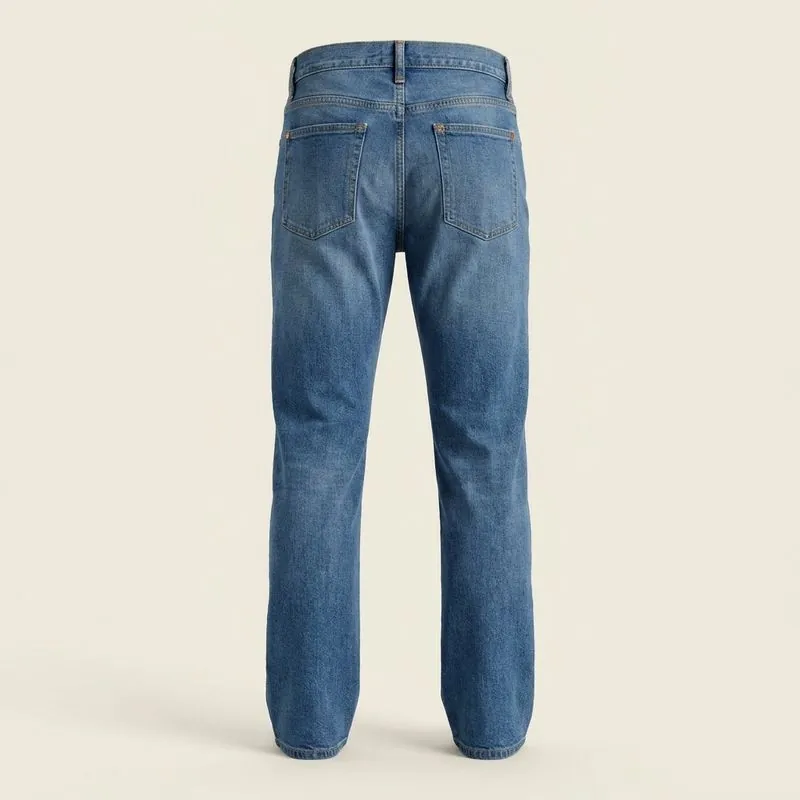
Tight jeans press the cloth against your skin, so there is no air between you and the cold. A little ease gives you a thin layer of air to warm and room to wear something underneath. Too much, though, and wind blows straight through the leg and the hem drags in slush.
- Thigh and seat: room for a base layer without pulling when you sit.
- Length: long enough to meet your winter boots, with no gap of bare ankle.
If you plan to layer, what ease is in jeans explains why one size feels so different from pair to pair.
3. Add a base layer
Long underwear or thermal leggings under your jeans is the most flexible way to dress for cold weather, because you adjust it through the day. Choose a thin, close-fitting layer; a thick one under a slim jean is where tightness starts. Our fit checklist shows what to check.
4. Consider lined jeans
Lined jeans have a soft lining sewn inside the leg. As a general rule, fleece is plusher and tends to feel warmer; flannel is lighter, more breathable and gives a slimmer leg. Because the lining takes up room, a size that fits unlined can feel snug, so it's worth having a pair cut for you. See our fleece and flannel lined jeans, or go straight to men's lined jeans or women's lined jeans.
Comparing the four options
| Option | Strengths | Trade-offs | Good for |
|---|---|---|---|
| Unlined heavy denim (13 oz) | Durable, wind-resistant, works in every season, easy to wash | No stretch; feels stiff when new; not warm on its own in hard cold | Cool, dry winters, or when you add your own layers |
| Long underwear under jeans | Adjustable; take it off indoors; works with any pair | Needs extra room; a bulky layer can make jeans feel tight | Variable days, commuting, travel |
| Flannel-lined | Lighter and more breathable than fleece; slimmer leg | Generally less warm than fleece; still a fixed layer | Cool days that turn mild by lunchtime |
| Fleece-lined | Plush and generally the warmer of the two | Less breathable; can feel hot indoors; fuller through the leg | Long stretches outdoors, or if you run cold |
General comparison. It isn't a temperature rating; how warm you feel also depends on your fit, your socks and shoes, and the wind.
What to do when your jeans get wet
Denim is cotton, and cotton absorbs water and dries slowly, especially in a thick weave. Wet fabric feels colder because water pulls heat from your skin faster than still air does. If you get soaked:
- Change out of them as soon as you can, even into dry track pants.
- Hang them to dry flat or on a hanger away from direct heat. Avoid high heat, which can shrink cotton (see do jeans shrink?).
- Pack a spare pair or an outer layer over your jeans if you'll be in rain or snow for hours.
Lined jeans have an extra layer to dry, so allow for that.
When winter jeans aren't worth it
In a mild climate, a warm office, or a car with the heater on, lined jeans can be more than you need. A heavier unlined pair plus a base layer for the coldest days is more versatile.
Questions
What jeans are best for cold weather?
Heavier denim (13 oz or more) in a fit with room for a base layer is the simplest answer. If you're outdoors a lot, fleece- or flannel-lined jeans add another layer inside the denim.
Can you wear long underwear under jeans?
Yes. Choose a thin, close-fitting layer and make sure your jeans have enough room in the thigh and seat so they don't feel tight.
Are fleece-lined jeans warmer than flannel-lined?
Generally, yes: fleece is plusher and tends to feel warmer, while flannel is lighter and more breathable. Neither is a substitute for dressing for the weather.
Why do jeans feel so cold when they're wet?
Denim absorbs water and dries slowly, and water pulls heat from your skin faster than air does. Change into dry clothes as soon as you can.