The short answer
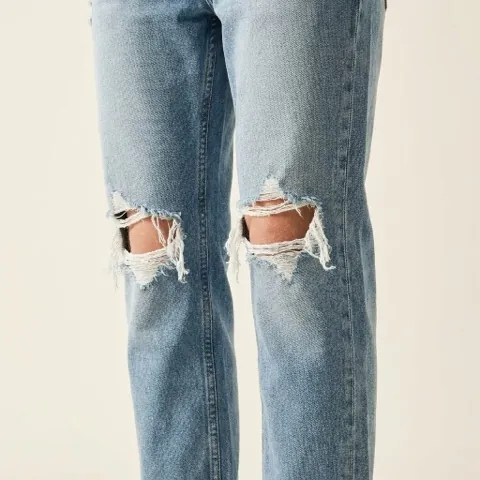
- Distressing imitates natural wear: whiskers at the hips, fades on the thighs, abrasion at edges and rips at the knees.
- Modern finishing increasingly uses lasers and ozone instead of hand sanding and harsh chemical sprays.
- Rips grow with wear and washing. Light whiskering changes the look without weakening the fabric much.
- Skip distressing for smart offices, cold winters and knee-heavy work.
A naturally worn-in pair of jeans takes years: creases set at the hips, the thighs fade, the knees thin and eventually split. Distressed jeans compress that story into a factory process. Done well, it looks lived-in rather than damaged. Here's how it works, how it lasts, and how to choose.
The vocabulary of distressing
| Effect | What it is | Where it appears | Effect on durability |
|---|---|---|---|
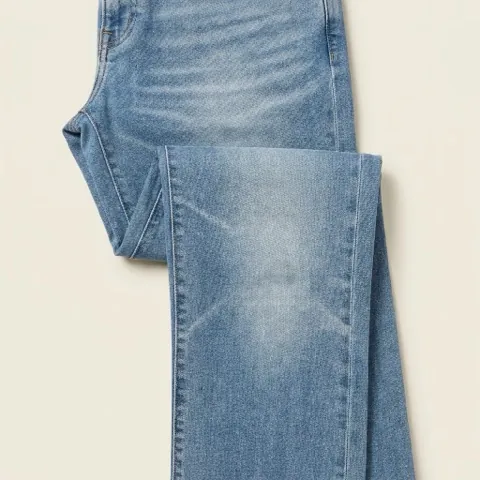
| Whiskers | Pale, horizontal crease lines | Front hips and crotch | Small |
| Honeycombs | Ladder-like fades from bending | Behind the knees | Small |
| Fading / highlights | Lighter areas where wear would happen | Front thighs, seat, knees | Small to moderate |
| Abrasion | Scuffed, fuzzy edges | Pockets, hems, seams | Moderate at edges |
| Rips | Cut or worn-through openings, often with white weft threads left across | Knees, thighs | High: openings grow |
How distressing is made (in general)
Methods vary by factory, but most distressing combines a few steps:
- Hand sanding and abrasion: workers rub sandpaper or abrasive tools on the high points to create whiskers and highlights.
- Stone and enzyme washing: pumice stones or enzymes in big washers soften and lighten the whole pair.
- Chemical sprays: oxidising sprays such as potassium permanganate have long been used to brighten worn areas.
- Lasers and ozone: lasers burn away a fine layer of indigo to draw whiskers and fades, and ozone gas bleaches without water. One large denim maker said in 2018 that laser finishing cut the time for a finish to about 90 seconds and let it phase out many chemical formulations (Project F.L.X. announcement).
- Cutting and shredding: rips are cut and then washed so the edges fray and the white weft shows.
One method has been widely rejected: sandblasting. It exposed workers to silica dust, and campaigners linked it to deaths from silicosis. Turkey banned it in 2009, and brands began announcing bans from 2010 (Clean Clothes Campaign).
How distressed jeans wear over time
Distressing is the start of wear, not the end. Whiskers and fades keep developing naturally on top of what the factory added. Rips are different: every wash and every bend pulls at the threads around the opening, so a small knee rip slowly gets bigger. If you like rips but want them to last, keep them small, and see how to repair holes in jeans for reinforcing one before it runs.
Caring for ripped and distressed jeans
- Turn them inside out and close the fly before washing.
- Wash cold on a gentle cycle, or by hand.
- Skip the dryer; heat and tumbling stress the frayed edges.
- Put them on carefully: toes and heels catch in knee rips.
- Trim long loose threads rather than pulling them.
When to skip distressing
- Smart or client-facing work. A clean dark pair always reads neater.
- Cold, wet winters. Knee rips let the weather in.
- Kneeling work or sport. Rips at the knee will widen fast.
- If you want your own fades. Choose raw indigo and let your wear do it; see how denim gets its color.
Distressing options at Jeanszilla
You can choose none, light whiskering (+$10) or ripped knees (+$15) on any adult style. Distressing reads best on mid and light washes, where the contrast is softer; compare shades in denim washes explained. Popular combinations to try: light whiskering on men's straight, ripped knees on mom jeans. Because your pair is cut from your measurements, if your knees sit unusually high or low for your height, mention it in the notes for your tailor.
Or browse men's styles.
Questions
Do ripped jeans get bigger over time?
Usually, yes. Washing and bending pull at the threads around the opening. Washing inside out on a gentle cycle and skipping the dryer slows it down.
What is whiskering on jeans?
Pale, horizontal lines across the front hips and crotch that imitate the creases a pair develops from sitting.
Are distressed jeans weaker?
Light whiskering and fading make little difference. Rips and heavy abrasion thin or open the fabric, so those areas wear out sooner.
Can I add rips to my own jeans?
You can, with a craft knife and tweezers to pull out the blue warp threads, but practice on an old pair first. Rips grow, so start smaller than you think.
Is sandblasting still used for jeans?
It has been banned in Turkey since 2009 and many brands have announced bans, because of the risk of silicosis for workers. Lasers and other methods are now used for similar effects.