The short answer
- Wear is the most reliable softener. Rigid denim relaxes at the knees, seat and waistband within weeks of regular wear.
- A wash with detergent removes new-denim finish and helps. Fewer, gentler washes keep color.
- A vinegar rinse is popular and low-risk for the denim, but the evidence is anecdotal. Never mix vinegar with bleach or hydrogen peroxide.
- Raw denim should not be washed early if you care about fades; rigid washed denim can be washed freely.
- Stretch denim is soft from day one. If a stretch pair feels stiff, it may be too small.
Stiffness isn't a defect. Dense cotton twill with no stretch feels firm until it has been creased and flexed. The question is how long you're willing to wait and what you'd trade for speed. For background on why it differs from stretch fabrics, see stretch vs rigid denim.
First, what kind of stiff is it?
| Denim | Why it's stiff | Best way to soften |
|---|---|---|
| Rigid, washed | 100% cotton with no stretch; heavy weight | Wash once with detergent, then wear |
| Raw (unwashed) | Finishing and dye are still in the cloth | Wear it; delay washing or follow raw-denim care |
| Stretch | Usually fit, not fabric: too small or too tight | Check the size; a wash may help a little |
| Dried on high heat | Heat can stiffen the fibers and shrink them | Rewash cold and air dry |
Method 1: wear them
This works for every denim. The fabric softens where it bends: knees, seat, hips and the waistband. Wear them around the house for a few hours at a time at first, and sit, squat and walk. There's no substitute for creasing the fibers. Expect weeks for rigid denim, and longer for heavy raw cloth.
Method 2: wash them
New denim can have finish on the cloth. A wash with a mild detergent helps. Turn the jeans inside out and use cold water on a gentle cycle, then hang to dry. This keeps the color and avoids shrinking; Levi Strauss's care advice also starts with turning jeans inside out (see our guide to washing jeans without fading). If the pair is dried flat on a rail, pull the seams straight while damp, which helps them dry without creases.
Avoid: hot water and the dryer unless you want the pair smaller. Our guide on how to dry jeans has the details.
Method 3: a vinegar rinse (with care)
A common suggestion is to soak the jeans in cool water with a splash of white vinegar for half an hour, rinse well, and air dry. Plenty of people report softer fabric. We could not find a lab source for it, so treat it as a low-risk try, not a guarantee.
- Use vinegar alone. Never add it to bleach or hydrogen peroxide, both of which can release harmful vapors or irritants (NJ Hazard Alert).
- Rinse thoroughly and test on a hidden spot if the denim is black or very dark.
Fabric softener is another popular trick. Use very little, if any. Too much can leave a coating, and it can make some fabrics feel greasy rather than soft.
What not to do
- Don't stretch or force them. Pulling at the waistband or knees can distort the shape.
- Don't tumble on high heat. It shrinks cotton and damages elastane.
- Don't use abrasives or sandpaper unless you want a distressed look, because they remove color permanently.
Raw denim is different
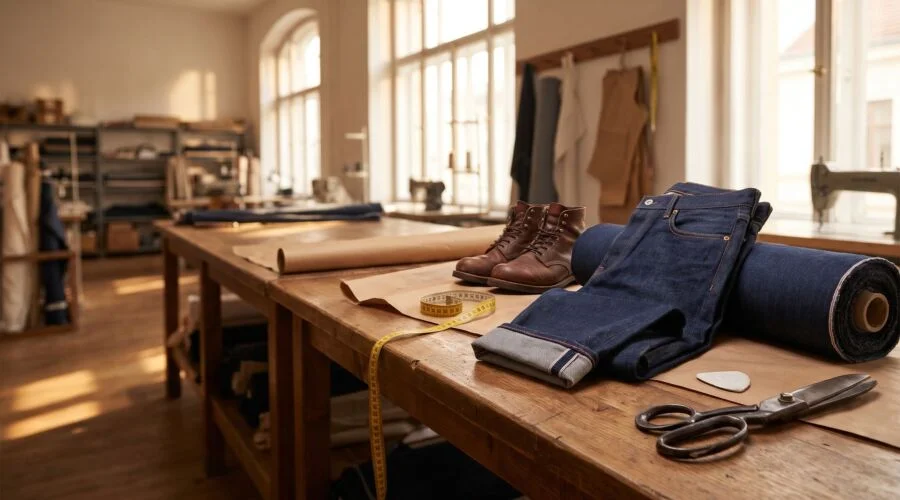
Raw denim is sold unwashed, and the indigo sits on the surface of the yarn. Washing early changes how it fades, which is why enthusiasts wear it first. Our post on raw and selvedge denim, shrinkage and break-in goes through the schedule. If you want the fades, the stiffness is part of the deal. If you want comfort straight away, raw is the wrong fabric.
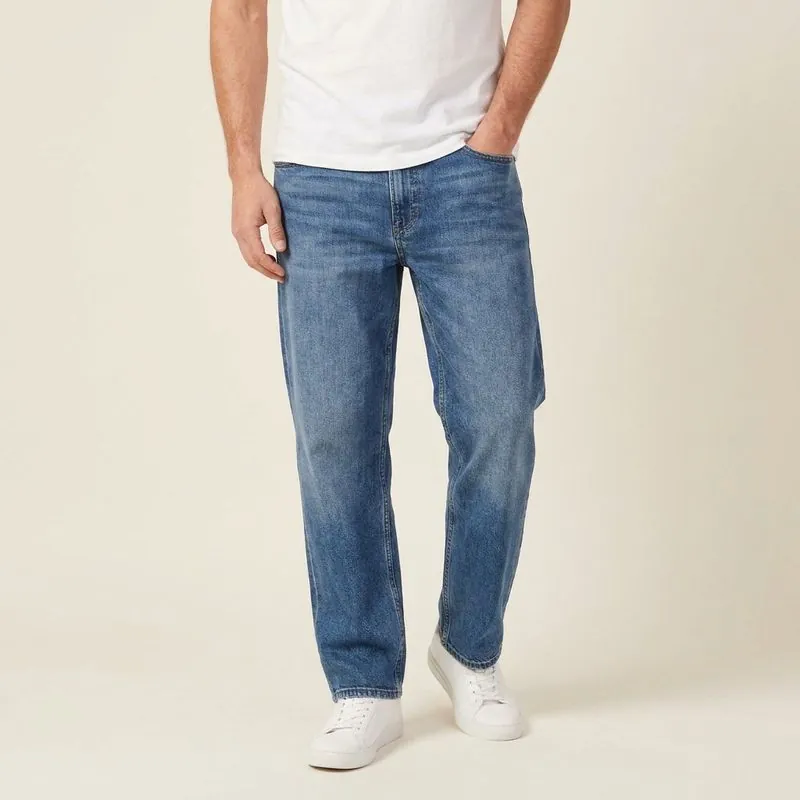
Our men's and women's jeans come in Classic Rigid, which is 100% cotton and feels firm until worn in. We also make a Soft Cotton Stretch fabric for those who want comfort from the first wear. Our Japanese-style Selvedge is raw denim (+$40).
When stiffness means the fit is wrong
If the jeans feel tight when you sit, pinch at the thigh or dig in at the waist, softening won't fix it. Check the numbers: copy the best-fitting jeans you own laid flat, or measure your body, and compare. A pair cut for you shouldn't need to be forced into shape.
Questions
How long does it take to break in stiff jeans?
For rigid denim, usually a few weeks of regular wear. Heavy raw denim takes longer. There's no exact figure; it depends on the weight and how often you wear them.
Does washing jeans make them softer?
Yes, a wash removes some finish and helps. Wash cold, inside out, and air dry to protect the color and size.
Does vinegar soften jeans?
Many people report that it does, but we found no lab source. It's low-risk on its own. Never combine it with bleach or hydrogen peroxide.
Should I wash raw denim to soften it?
Only if you're willing to lose the fade pattern. Wearing it is the usual route, and a first wash is a personal choice.
Why are my new stretch jeans stiff?
Stretch denim is normally soft. If it feels stiff, the pair may be too small, or it may have been dried on high heat.