The short answer
- A jeans size is a label, not a guarantee. Brands draft their own patterns, so the same 32 can measure differently.
- Vanity sizing, labelling clothes smaller than they measure, has been reported for years.
- Even an accurate size only fixes the waist and length. Seat, thigh, rise and leg shape are left to the brand's idea of an average body.
- Measure a pair that fits you well, or your body, and compare numbers, not labels.
You buy your usual 32 from a new brand and can't button it. The next brand's 32 slides off your hips. It isn't you. Jeans sizes are names each brand gives to its own patterns, and there's no rule that says a 32 has to measure 32 inches.
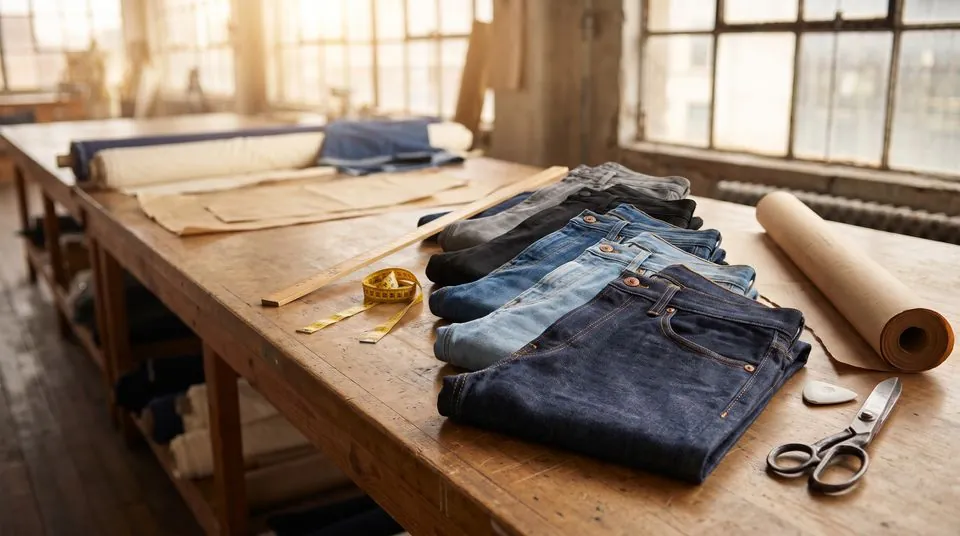
Why the same size fits differently
Each brand drafts its own patterns
A brand starts from a base pattern built around its idea of a typical customer, then grades it up and down into sizes. Two brands with different base customers produce two different 32s, even if both are "true" to their own charts.
Body measurement or garment measurement?
Some size charts list your body waist; others list the jeans' waistband. A pair needs some ease over your body to be comfortable, and stretch denim needs less than rigid. Mix up the two and you can be an inch or two out before you even try them on.
Vanity sizing
Vanity sizing means labelling clothes smaller than they measure, so shoppers feel good about the number. It has been reported for years. In a widely cited 2010 magazine test, men's trousers labelled with a 36" waist measured from 37" up to about 41" (NPR, Marketplace). The practical lesson: the label is a starting point, not a measurement.
Where the waistband sits
A low-rise 32 sits lower on your body than a high-rise 32, where you're usually wider or narrower. The same tape measurement at a different height is a different fit.
The bigger problem: a size only fixes two numbers
Even a perfectly honest waist and inseam size leaves everything else to the brand's average: seat, thigh, knee, rise and leg opening. If your thighs, seat or waist-to-hip difference don't match that average, every size of that cut will be wrong somewhere. That's why you can have a waist that fits and thighs that don't, or the reverse.
| Measurement | Set by a store size? | What happens if yours is different |
|---|---|---|
| Waist | Yes, roughly | Gap or dig at the waistband |
| Inseam | Yes, in steps (often 2") | Stacking, or ankles showing |
| Hips / seat | No, it follows the waist | Tight across the hips, or a baggy seat |
| Thigh | No | Drag lines down the thigh, or extra fabric |
| Rise | Only by style (low, mid, high) | Waistband digs in or slips down when you sit |
| Leg opening | Only by style | Too wide or too narrow at the ankle |
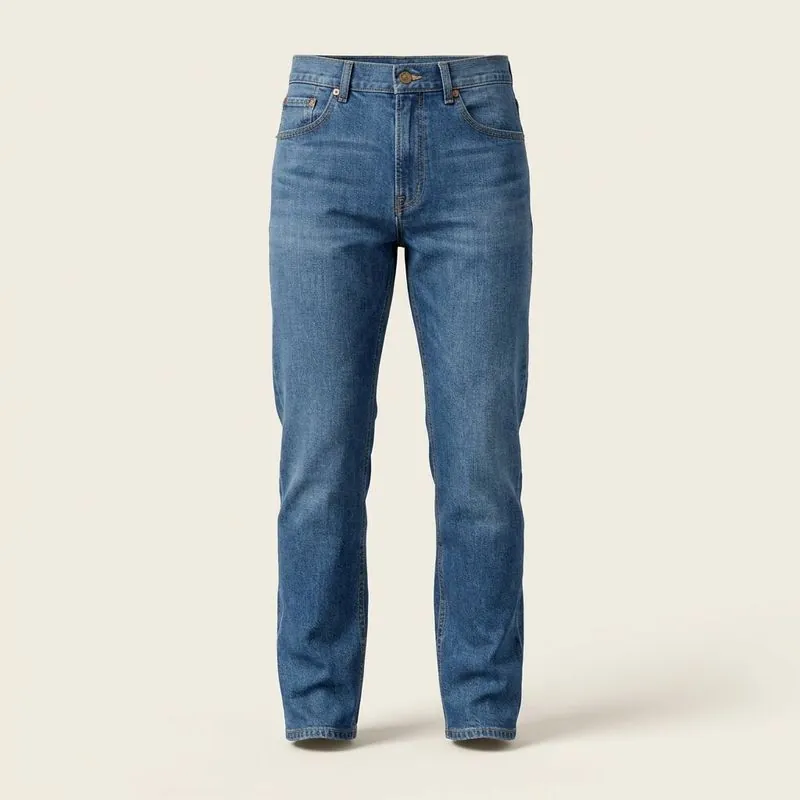
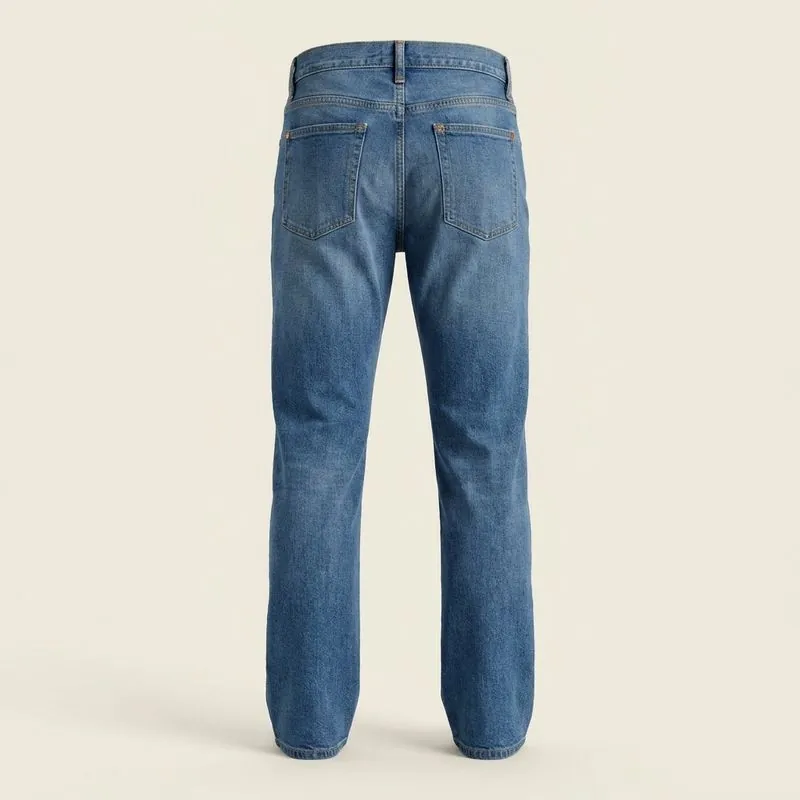
How to find your real size
- Measure the jeans that fit you best. Lay them flat and buttoned. Measure across the waistband edge to edge and double it; across the hips about 7" below the waistband and double it; across one leg 1" below the crotch seam and double it; then the inseam from the crotch seam to the hem.
- Measure yourself. Your waist where you wear your waistband, your hips at the fullest point with feet together, your thigh at its fullest just below the crotch, and your inseam to where you want the hem.
- Compare numbers, not labels. When a brand publishes garment measurements, compare them with your favorite pair. If it only publishes a size chart, check whether it lists body or garment measurements.
The full method, with a table for each measurement, is in the measuring guide.
When a store size is fine, and when it isn't
If your usual size fits everywhere except the length, a hem from a local tailor is quicker and cheaper than anything else. If you hit the same problem in every brand (thighs, seat, a gap at the back, or a waist and inseam that never come together in one size), the size system itself is the problem, and that's when a pair cut from your own measurements is worth it. See the wrinkle guide to work out which of those you have.
How Jeanszilla sizes a pair
There are no sizes. You give us your waist, hips, thigh and inseam, or copy your best-fitting pair, or give us your height, weight and usual size, and choose a fit preference: snug, regular or roomy. A pattern maker checks the numbers within 1 working day and emails you before cutting if anything looks unusual. Every size is the same price, with waists from 24" to 70".
Or browse men's styles and kids' styles.
Questions
Why is my jeans size different in every brand?
Each brand drafts its own patterns from its own idea of a typical body, and some label sizes smaller than they measure. The number is a size name, not a standard measurement.
What is vanity sizing?
Labelling clothes with a smaller size than they actually measure, so the number feels better. It means your usual size can fit very differently from one brand to the next.
Is a 32 waist really 32 inches?
Not always. Some brands measure the waistband, some use your body waist, and some pairs measure larger than their label. Measure the waistband of a pair that fits you to know your real number.
Should I size up or down in jeans?
If only the waist is wrong, sizing may help. If the thighs, seat or rise are wrong while the waist fits, changing size moves the problem somewhere else.
How do I find my real waist size for jeans?
Measure the waistband of your best-fitting jeans laid flat and double it, or measure your body where you wear your waistband with the tape level all the way round.