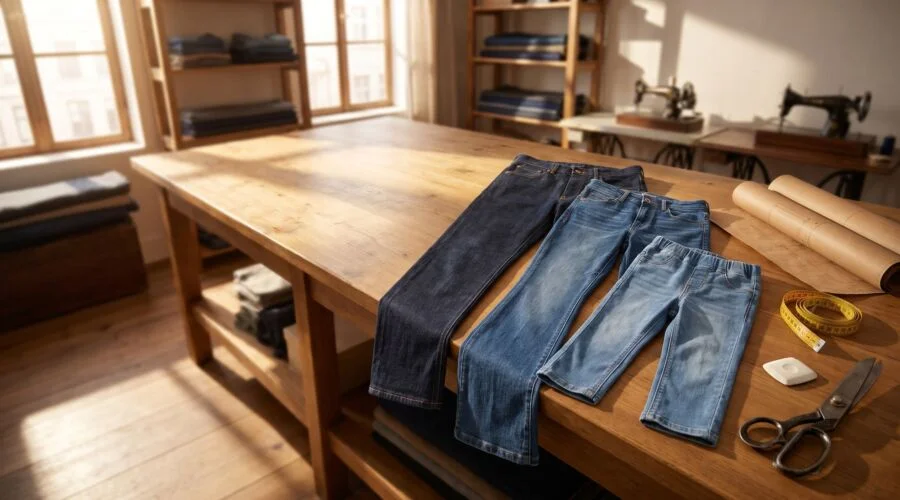
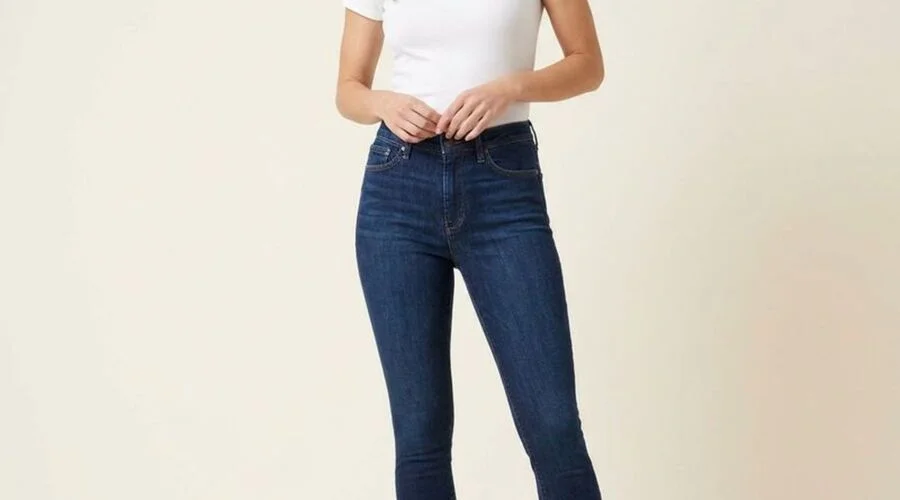
Your height and your size matter less than your proportions: where your waist sits, how long your legs are, how your hips and seat compare. Here's which rise, length and leg balances each.
A cuff is length control and a style choice at once. Here's which cuff suits which leg and fabric, how much length each takes up, and when to leave the hem alone.
Rise is two measurements, not one. Here's why the back is longer than the front, what each rise level means on your body, and how to measure a pair you like.
Snug is a fit. Too tight is a problem. Here's how to tell them apart at each point of a pair of jeans, and how stretch and rigid denim change the answer.
Holes between the thighs aren't bad luck. They come from friction, fabric under tension and grit in the weave. Here's what speeds it up and what to change next time.
The leg opening is the width of the hem, and it decides more of your silhouette than most people expect. Here's how to read the number, flat or around, and what each width does.
A good fit isn't one feeling: it's six checkpoints from the waistband to the hem. Here's what each should look and feel like, which measurement controls it, and how to check it in two minutes.
Jeans that fit your hips but gap at the back of the waist are one of the most common fit complaints. Here's what causes it, who it happens to, and the fixes that work.
The right length depends on three things: your shoes, the width of the leg opening and the look you want. Here's where the hem should land for each, and how to measure for it.
Creases are not random. Each drag line, fold or gap in a pair of jeans points to one measurement that's off. Here's how to read them, which ones a tailor can fix, and what to measure next time.
This website uses cookies to improve your experience. By clicking “Deny”, you consent to the use of Necessary cookies only. You may also accept selected cookies only.