The short answer
- An age size is built for an average child of that age. Very few children are average in both height and build.
- Height decides the leg length; waist and hips decide the width. Age decides neither.
- Slim, regular and husky are width options for the same height, not judgements about a child.
- Rule of thumb: fit the child, not the age. Measure height, waist, hips and inseam every time.
If you've ever bought jeans in your child's age size and found them flapping at the waist, an inch short, or both, you've met the problem with age sizing. The label isn't wrong about the average child. It's just that your child isn't the average child, and neither is anyone else's.
Why the age on the label misses
Kids' sizes are drawn up around a typical height, waist and hip for each age. But children of the same age spread out widely. The pediatricians at HealthyChildren.org note that height differences in a typical elementary school classroom can range from 4 to 5 inches (American Academy of Pediatrics), and the CDC growth charts show the same thing as a fan of percentile curves that widens with age. Then add build: two children of identical height can have very different waists.
On top of that, every brand draws its own size chart, which is why an "8" in one shop is a "7" or a "10" in another. We explain the adult version of that problem in why jeans sizes differ between brands; children's sizing has all the same issues, plus growth.
What really decides the fit
| Number | What it controls | What goes wrong if you size by age |
|---|---|---|
| Height | Overall length, rise | Tall-for-age kids get high-water hems; shorter kids get stacked, dragging legs |
| Inseam | Leg length exactly | Same as above, but more precise: leg length varies even at the same height |
| Waist | Whether they stay up | Too big falls down or bunches under a belt; too small digs in when sitting |
| Hips / seat | Room to sit, climb, run | Tight seat, pockets that flare open, seams that strain |
| Weight | A cross-check for the others | Nothing directly; it helps a pattern maker spot a mis-measured number |
This is why we ask for age, height, weight, waist, hips and inseam for every kids' order. How to take them without a struggle is in how to measure a child for jeans.
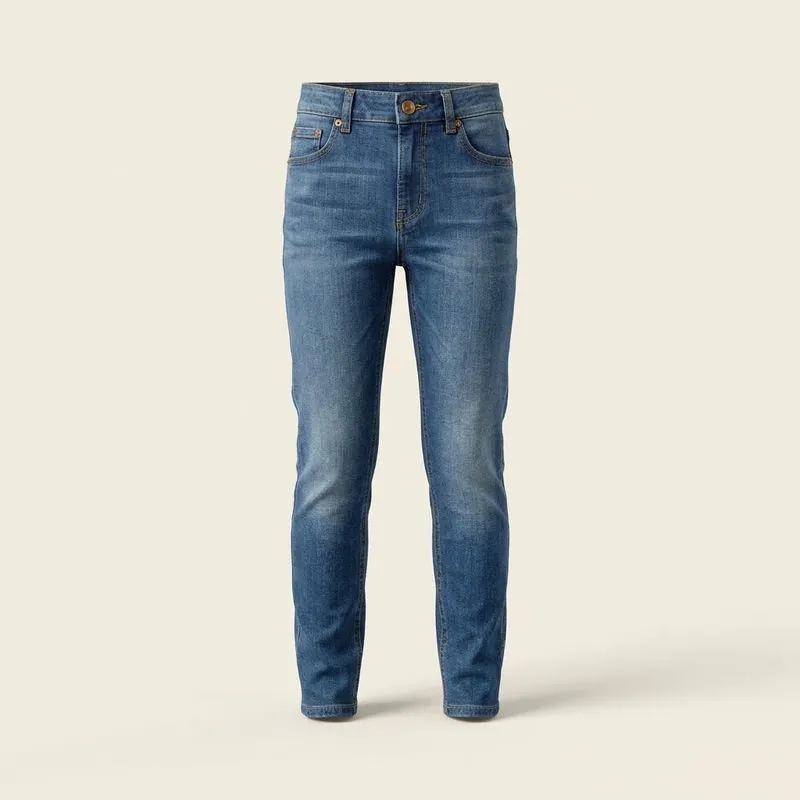
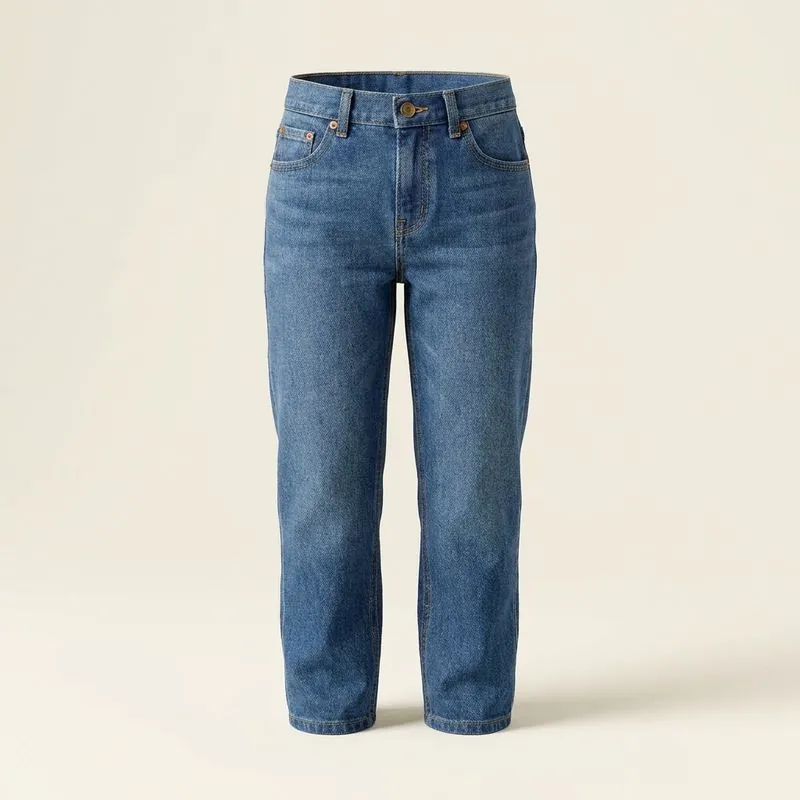
Slim, regular, husky: what the words mean
Many shops sell the same age size in two or three widths. The names vary, but the idea is consistent: length stays the same, width changes.
- Slim is cut narrower through the waist, seat and leg, for children whose trousers usually gape or need a belt. See slim jeans for kids.
- Regular is the standard width a size chart assumes.
- Husky (sometimes called "plus" for girls) gives more room in the waist, seat and thigh, for children whose age-size jeans fit in length but pinch everywhere else. It's a size name, nothing more. See husky jeans for kids.
We also make a Pull-On style with a full elastic waist and no fly, for children who find buttons and zips hard going; it's on our adaptive jeans for kids page.
When you order by measurement, the label matters less: the waist and hips come from your numbers. Pick the style for the shape your child likes to wear, closer or easier, and the numbers do the rest.
A quick decision rule
- Do their age-size jeans fit in length? If not, height or inseam is the problem: measure the inseam.
- Do they fall down or gape at the back? Waist is the problem: slim, or an adjustable waistband.
- Do they fit in length but pinch at the waist, seat or thigh? Width is the problem: husky, or measured waist and hips.
- Is it all three, or does it change every few months? Stop buying by age and order from measurements.
When age sizing is fine
To be fair to the label: if your child sits near the middle for both height and build, age-size jeans will often fit well enough, and an adjustable waistband covers small gaps. Age sizes also work for very young children, whose jeans are mostly elastic anyway. Measuring pays off when your child is clearly taller, shorter, slimmer or sturdier than the size assumes, or when you're tired of returns.
Shopping for one child? Browse boys' jeans or girls' jeans. Planning ahead? Read the back-to-school jeans guide.
Questions
What size jeans should a 10-year-old wear?
There's no reliable answer from age alone: it depends on their height, waist and hips. Measure those and compare them to a size chart, or order by measurement.
Is husky the same as 'size up'?
No. Sizing up adds length as well as width, so the legs end up too long. Husky keeps the length and adds room in the waist, seat and thigh.
My child is between sizes. Which way should I go?
For length, choose the inseam that fits now and add a grow-room hem. For width, an adjustable waistband handles small gaps better than a bigger size.
Do boys' and girls' jeans sizes differ?
Often, yes, in rise, seat and leg shape, and every brand differs again. Measuring removes the guesswork for both.