The short answer
- You need four things: height, waist, hips and inseam, plus age and weight.
- Measure the body for waist and hips; measure their best-fitting trousers for the inseam. It's faster and more accurate than chasing a moving leg.
- Measure over underwear or thin leggings, never over jeans, and write each number down straight away.
- Add the grow-room hem if the pair needs to last more than a season; don't just order longer legs.
Measuring an adult takes patience. Measuring a six-year-old takes patience, speed and a bribe. The good news is that kids' jeans need fewer numbers than adult jeans, and the hardest one, the inseam, is easier to take from a pair of trousers than from the child. Here is the order that works, with the shortcuts tailors use.
What you need before you start
- A soft tape measure (a phone charger cable and a ruler will do in a pinch).
- Their best-fitting pair of trousers or jeans, the ones they reach for first.
- A wall and a hardback book for height.
- Something to write on, and a show or a game to hold their attention for five minutes.
Pick a calm moment rather than straight after a big meal or at bedtime, and keep the tape snug but not pulled: you should be able to slide one finger under it. Our measuring guides show every point with pictures.
The four measurements, in the order that works
| Measurement | Where | How to get it from a wriggler |
|---|---|---|
| Height | Barefoot, heels to the wall, book flat on the head | Do it first, as a "how tall are you now?" game. Mark the wall, measure the mark. |
| Waist | Where their trousers actually sit, usually around or just below the belly button | Ask them to breathe out and stand like a statue for three seconds. Don't let them suck in. |
| Hips | Around the fullest part of the seat, feet together | Stand behind them; it's less ticklish than the front. Keep the tape level all the way round. |
| Inseam | Crotch seam to hem on their best-fitting pair, laid flat | No child needed. Measure along the inner leg seam, smoothing out wrinkles. |
Then add their age and weight. Height and weight together help a pattern maker sanity-check the other numbers, which matters with children: a waist taken while they were giggling can be an inch out.
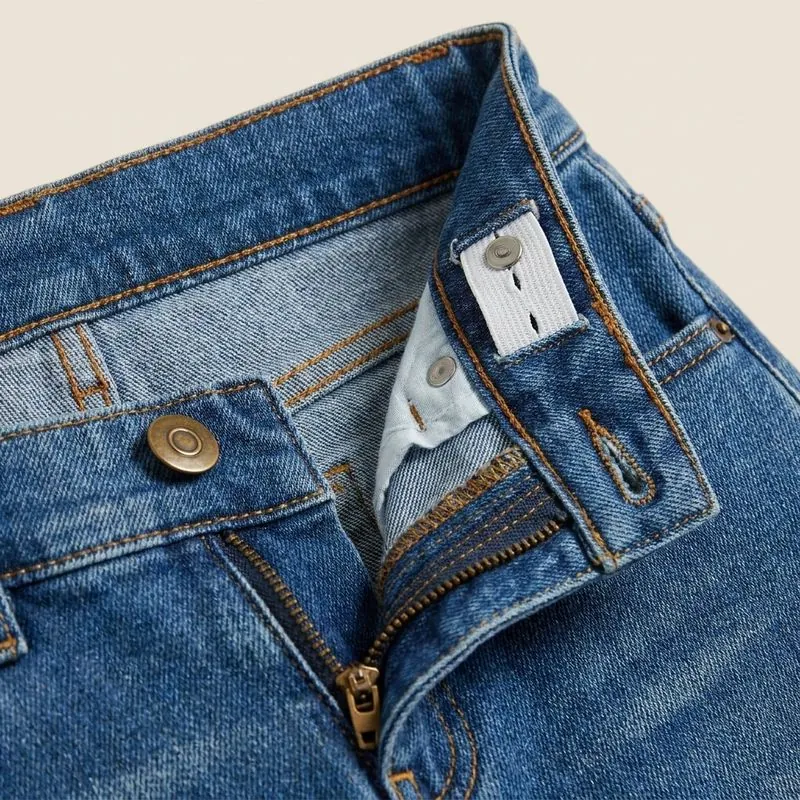
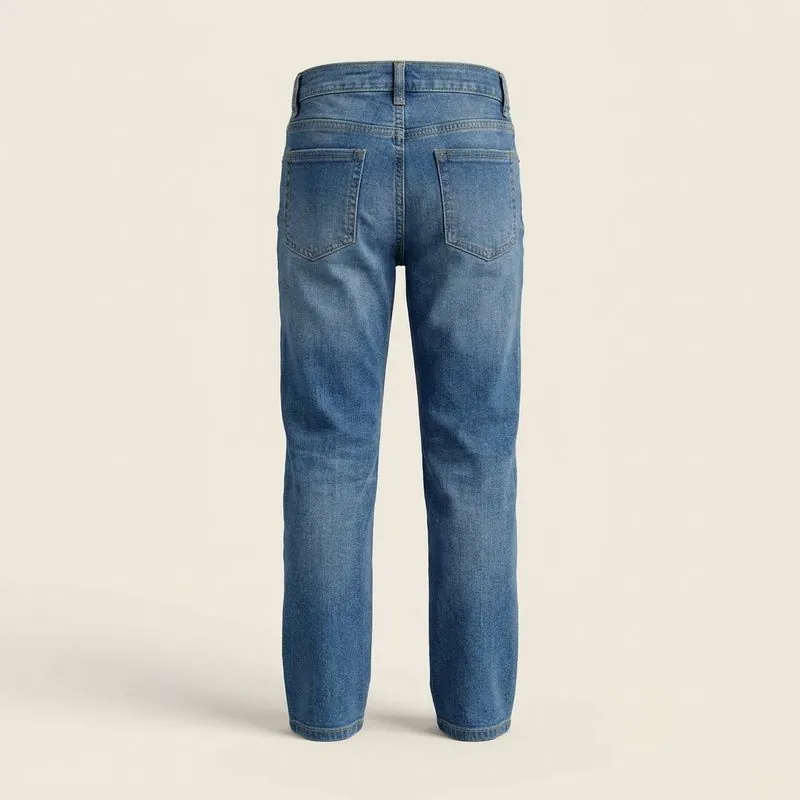
Copy their best pair as a cross-check
The single most useful thing you can do is measure the trousers they already love. Lay them flat, button them, and measure:
- Waist: straight across the top of the waistband, then double it.
- Hips: straight across about 3" below the waistband for younger kids (a little lower for older ones), then double it.
- Inseam: crotch seam to hem.
A garment is always a little bigger than the body inside it (that's ease, explained in what ease means in jeans), so don't worry if the flat numbers come out larger than the body numbers. What you're checking is that they agree roughly. If the body says a 21" waist and the favorite pair says 26", one of them is wrong, and it's worth measuring again. Tell us what you measured, and anything they like or hate about that pair, in the notes for your tailor: "loves these, but they're short at the ankle" is exactly the kind of note that helps.
Common mistakes that make kids' jeans fit badly
- Measuring over jeans or thick trousers. Thick layers add an inch or more.
- Measuring the waist at the adult natural waist. Most children wear trousers lower than that; use where theirs sit.
- Adding growing room to every number. A waist two inches too big just falls down. Grow room belongs in the hem, and an adjustable waistband handles the rest.
- Rounding everything up. Give the real numbers; we add the ease for the style and fabric.
- Using last year's numbers. School-age children grow a little over 2 inches a year on average, and some grow up to three times faster in one season than another (HealthyChildren.org, American Academy of Pediatrics). Measure fresh every time.
When to add the grow-room hem (and when not to)
Our kids' jeans can have a grow-room hem: 1.5" of extra length sewn inside the hem, which you let down later (+$8). Add it when:
- the pair needs to last a full school year or longer;
- your child is in an obvious growth phase (shoes and sleeves are suddenly short);
- you're ordering more than one pair at once.
Skip it when the jeans are for a single event, or when your child already wears trousers turned up and you'd rather order the exact length now. Either way, order the inseam that fits today. Ordering 2" too long "to grow into" means dragging, fraying hems for months. The full how-to is in the grow-room hem, explained.
Not sure which cut? Compare slim jeans for kids and husky jeans for kids, or read why age sizes miss and our general jeans measurements glossary.
Questions
Do I need to measure my child's thigh?
No. For kids' jeans we ask for age, height, weight, waist, hips and inseam. If they're often tight across the thighs, say so in the notes for your tailor.
My child won't stand still. Which number matters most?
Get the waist and hips from the body, then take the inseam from a pair of trousers that fits. Height can be done against a wall in seconds.
Should I measure in centimeters or inches?
Either is fine as long as you're consistent. Write down the unit next to every number.
What if I'm between two numbers?
Give the larger one and add a note. A pattern maker checks every order within 1 working day and emails you if anything looks unusual.
How often should I re-measure?
Before every order. Children grow unevenly, so last season's numbers are a guess, not a measurement.