The short answer
- Wrinkles that point at something are pulling: that area is too tight.
- Wrinkles that sag or fold are spare fabric: that area is too big or too long.
- A tailor can shorten, take in a waist and slim a lower leg. Letting out a thigh, seat or rise is usually impossible, because there is almost no spare fabric in those seams.
- Those are the problems a pair cut to your own numbers solves, because thigh, seat, waist and length are measured separately.
Most fit advice stops at "size up" or "see a tailor". That only helps if the size is the problem. Jeans are cut from flat pattern pieces, and every crease you see in the mirror is the fabric telling you which piece is the wrong shape for your body. Read the creases correctly and you know exactly what to change: a different size, an alteration, a different cut, or a pair made from your measurements.
How to read a wrinkle in 10 seconds
Stand relaxed in front of a mirror, then turn sideways and look back over your shoulder. Two rules cover almost everything:
- Drag lines (diagonal or fan-shaped creases) point to tightness. Follow the line to where it starts; that's the spot that's too small.
- Folds and pools (soft horizontal waves or loose bags of fabric) mean excess. There is more fabric than body there, in width or length.
Then check the one problem a mirror can't show you: sit down. A waistband that digs or gaps when you sit is a rise problem, not a waist problem.
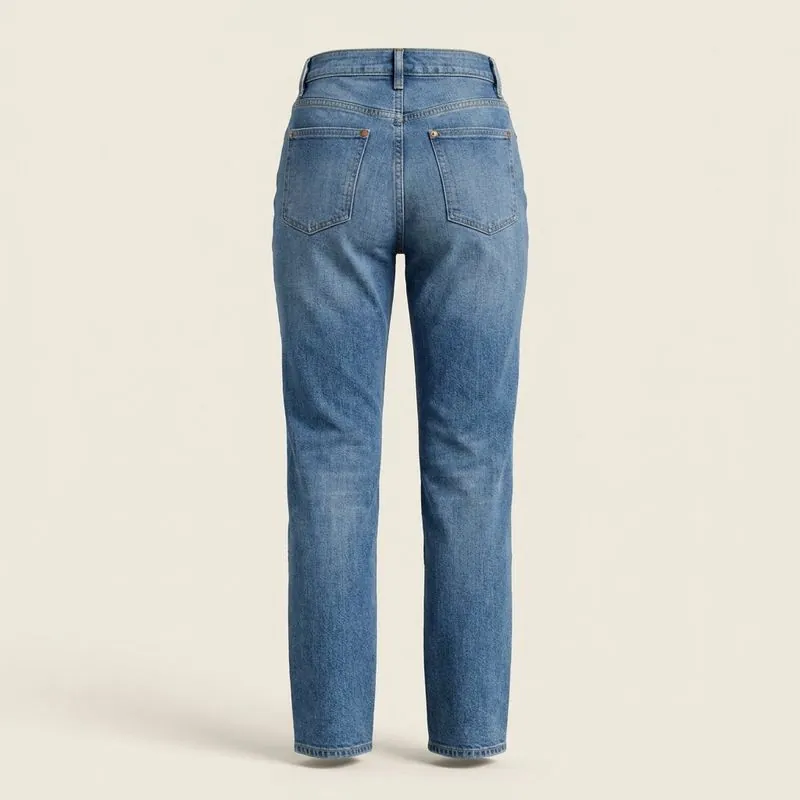
The wrinkle atlas: symptom, cause, fix
Use this table with the jeans on. "Tailor" is what an alteration can usually do; "Measure" is what to give a pattern maker so the next pair is right from the start.
| What you see | What it means | Can a tailor fix it? | Measure next time |
|---|---|---|---|
| Horizontal "smile" creases fanning from the crotch toward the hips | Too tight across hips and upper thighs | Rarely: there's little spare fabric to let out | Hips at the fullest point, and thigh |
| Diagonal drag lines from the crotch down the front of the thigh | Thigh too narrow for your leg | No: thighs can't be let out more than a fraction | Thigh, around the fullest part, 1" below the crotch |
| Gap at the back of the waistband | Waist and hips sized for a different body shape | Often yes: a tailor can take in the back waist, though pocket placement can suffer | Waist and hips as separate numbers |
| Loose, sagging fabric under the seat | Too much seat room, or a back rise too long for you | Partly: the seat can be taken in a little | Hips, plus the back rise of a pair that sits right |
| Waistband digs in or slides down when you sit | Back rise too short for your seat | No: rise can't be added | Back rise, or choose a higher rise |
| Fabric pulls tight into the crotch at the front | Front rise too short | No | Front rise, or a higher rise option |
| Front pockets flare open | Hips tighter than the waist allows for | Rarely | Hips, at the fullest point with feet together |
| Stacked folds piling at the ankle | Inseam too long for your shoes | Yes, but hemming can change a tapered leg's shape | Inseam, wearing the shoes you'll wear |
| Wide leg flapping at the ankle on a slim fit | Leg opening wider than your style | Yes: legs can be tapered | Leg opening of a pair you like, measured flat and doubled |
Tailoring capabilities vary by shop and by how a pair is sewn; treat the middle column as typical, not guaranteed.
The three problems no alteration can fix
Alterations work by removing fabric or using the small seam allowance a factory leaves. That's why a hem or a taper is easy and a bigger thigh is not. Three problems sit in the "no" column for almost everyone:
- Thighs too tight with a waist that fits. The usual workaround is to size up and belt the waist, which creates the back gap instead. The real fix is a pattern whose thigh and waist come from two different measurements. If this is you, read jeans for big thighs.
- A rise that's too short. You can't add fabric between the crotch and the waistband. A higher rise option, or your own front and back rise measurements, is the only answer.
- A waist gap on a curvy shape. A tailor can close a small gap, but a large waist-to-hip difference needs the waistband and yoke cut for it. See curvy jeans with no waist gap.
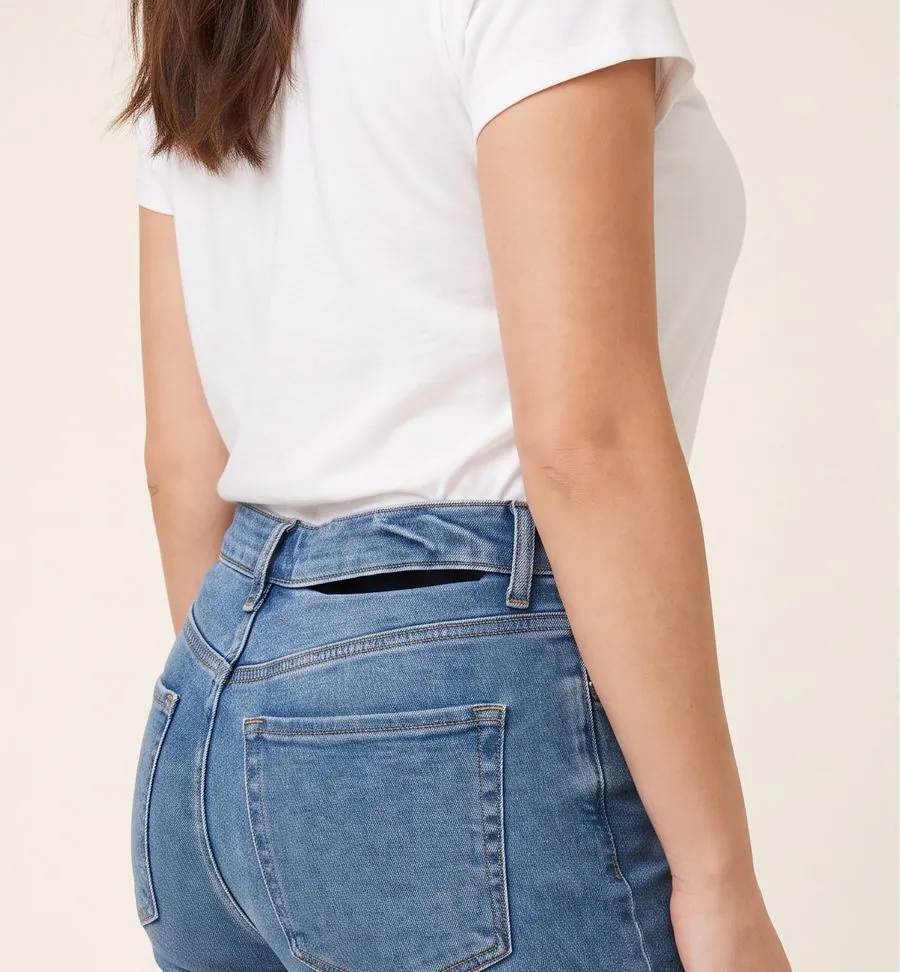
Illustrative images.
Before you buy another size: a 5-minute fit check
- Button the jeans and stand naturally. Look for drag lines at the front crotch and thighs.
- Turn sideways and look at the back waistband. Can you slide more than two fingers in?
- Sit on a hard chair for a minute. Does the waistband dig in at the front or drop at the back?
- Do a deep squat. Tightness across the thighs or seat that releases when you stand is a thigh or seat problem.
- Check the hem in the shoes you wear most: one soft fold, or a pile of stacked fabric?
Write down which rows of the table you hit. Two or more rows from the "no" column is a strong sign that no size of that cut will fit you, and that measuring is a better use of your money than another trip to the fitting room.
How a pair cut to your measurements avoids them
At Jeanszilla every pair starts from your waist, hips, thigh and inseam, plus your height and weight. Knee, leg opening, front rise and back rise are optional, and there's a "notes for your tailor" box for anything a table can't capture, such as "gaps 2 inches at the back" or "pulls across the thighs when I squat". Within 1 working day a pattern maker reviews the numbers and emails you if anything looks unusual, before any fabric is cut.
The easiest way to start is to copy a pair that almost fits: lay it flat, follow the measuring guide, and use this wrinkle table to write down what you'd change.
Which pages to read next
- Thighs fit but the waist doesn't: jeans for big thighs
- Gap at the back of the waist: curvy jeans with no waist gap
- Waist size beyond store racks: big and tall jeans and plus size jeans
- All styles: men's, women's and kids'
Questions
Why do my jeans have creases at the crotch?
Creases that fan out from the crotch toward the hips mean the jeans are too tight across the hips and upper thighs. Soft folds that hang down instead mean there's too much fabric, usually in the seat or rise.
Why do my jeans sag in the back?
A baggy seat usually means the seat is wider than you need or the back rise is longer than your body. Measure the back rise of a pair that sits flat and use it next time.
Can a tailor make jeans bigger in the thighs?
Usually only by a fraction, because the seams hold very little spare fabric. If the thighs are tight and the waist fits, a different cut or a pair made from your thigh measurement is the reliable fix.
Is it normal for jeans to stretch and get baggy?
Stretch denim relaxes with wear, and cotton denim molds to you. If they bag a lot by the end of the day, a snugger fit or a fabric with more elastane is worth considering.
Where should I measure my thigh?
Around the fullest part of one thigh, just below the crotch. When measuring a pair of jeans laid flat, measure across one leg 1" below the crotch seam and double it.