The short answer
- Ease is the difference between your body measurement and the finished jeans.
- Wearing ease lets you sit, bend and breathe. Style ease creates the look: a slim leg has little, a relaxed leg a lot.
- Rigid denim needs more ease than stretch, because it can't give when you move.
- Give your real, snug-but-not-tight body measurements. The pattern maker adds the ease; adding your own doubles it.
Measure a pair of jeans that fits you well and compare it with your body, and the jeans will be bigger almost everywhere. That isn't sloppy sizing. It's ease: room built into the pattern on purpose. Understanding it explains why your measurements and a size chart never match, why the same numbers feel different in different fabrics, and why padding your own numbers backfires.
Two kinds of ease
Pattern makers split ease into two parts. Wearing ease is the minimum room a garment needs so you can move in it. Design ease (or style ease) is extra room added to create a silhouette, from close-fitting to loose (Seamwork). In jeans, wearing ease lives mostly at the waist, seat and thigh, where you sit and bend. Style ease shows most from the thigh down, where it shapes the leg.
Ease you can see in the numbers
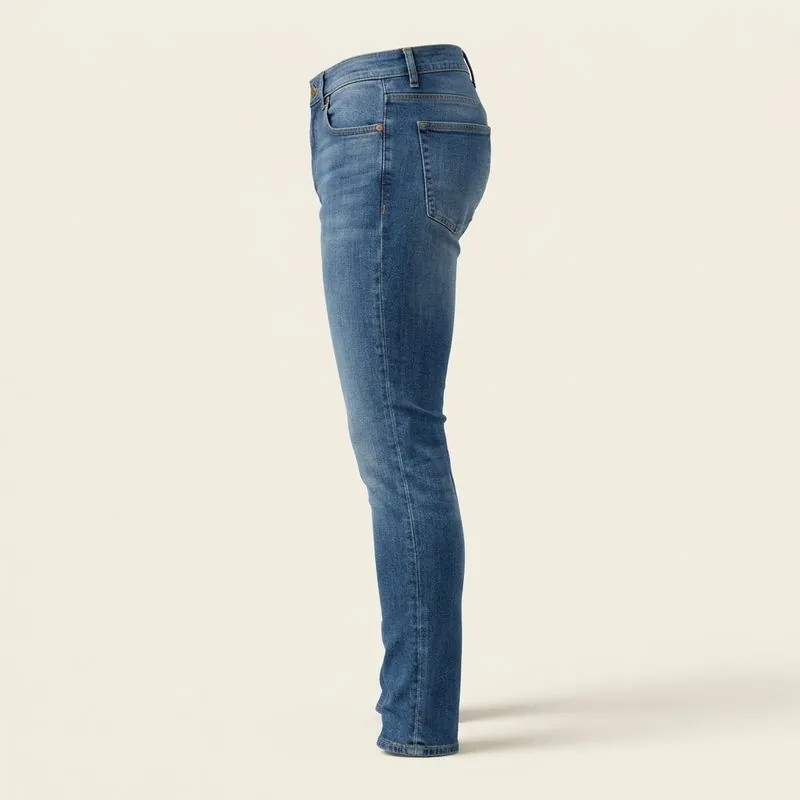
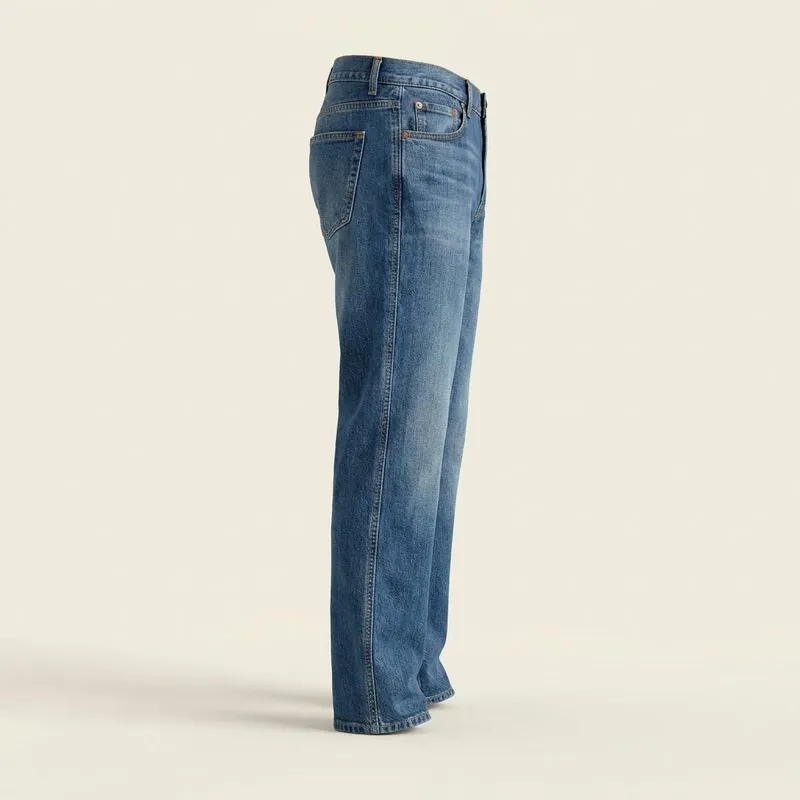
Our finished measurements show style ease clearly. At the same 32" men's waist, the finished thigh is 21" in skinny, 22.5" in slim, 24" in straight and 26" in relaxed. The person inside could be identical; the extra 5 inches between skinny and relaxed is style. Women's fits show the same pattern at a 28" waist, from a 19" thigh in skinny to 24" in wide leg and barrel.
| Where | Main kind of ease | What too little feels like | What too much looks like |
|---|---|---|---|
| Waist | Wearing | Digs in when you sit or eat | Gaps; needs a belt |
| Seat | Wearing | Pulls when you sit; pockets stretch | Sags under the seat |
| Thigh | Both | Drag lines; hard to squat | Folds that rub between the legs |
| Knee | Mostly style | Catches when you bend | Bags at the knee |
| Leg opening | Style | Hard to get over your heel | Swamps the shoe |
Finished measurements: men's at a 32" waist, women's at 28". Each pair is cut from your own numbers.
Fabric changes how much ease you need
Rigid, 100% cotton denim has no give, so it needs enough wearing ease for every position you'll sit and bend in. Stretch denim gives, so it can be cut closer and still let you move. Very stretchy garments can even be cut smaller than the body, which pattern makers call negative ease; it's common in knits (Seamwork), much less so in woven denim. That's why our Power Stretch (4% elastane) can sit closer than Classic Rigid (13 oz, 100% cotton) with the same fit preference and still feel comfortable. The fabric side is covered in stretch vs rigid denim.
Fit preference: snug, regular, roomy
When you order from Jeanszilla, you pick a fit preference as well as a fit. The fit (skinny, straight, wide leg) sets the shape; the preference sets how close it sits within that shape. Snug suits people who like jeans close and stretch fabrics; regular is the middle; roomy suits people who sit a lot, prefer rigid denim, or are between shapes. The pattern maker works out the ease for that combination of fit, fabric and preference.
When not to add your own ease
- Don't add an inch "to be safe". It stacks on top of the ease we add, and the jeans come out loose.
- Don't measure over jeans or thick clothes. Measure over thin underwear, standing relaxed.
- Don't pull the tape tight or hold your breath; snug against the body, not squeezing.
- Do say how you like jeans to feel in the notes for your tailor if snug, regular or roomy doesn't quite describe it.
- Do copy a pair instead, if you have one that fits: a garment measurement already includes its ease. See how to copy your favorite jeans.
Why ease makes size charts confusing
Brands add different amounts of ease to the same labelled size, and some charts list body measurements while others list garment ones. That alone explains much of the confusion covered in why jeans sizes differ between brands. Every term used here is defined in jeans measurements explained.
Or browse women's styles.
Questions
What is ease in jeans?
The difference between your body measurement and the finished jeans. It gives you room to move and creates the style's shape.
How much ease do jeans have?
It varies by fit, fabric and area. A skinny leg has very little through the thigh; a relaxed leg several inches more.
Should I add ease to my measurements?
No. Give your real body measurements and choose a fit preference; the pattern maker adds the ease.
Do stretch jeans need less ease?
Yes. Elastane lets the fabric give, so stretch jeans can be cut closer than rigid ones and still feel comfortable.
What is negative ease?
A garment cut smaller than the body, which relies on stretch. It's common in knits and rare in woven denim.