The short answer
- Waist: snug without digging; you can slide one or two fingers into the waistband.
- Seat: follows your shape with no pulling and no sagging fabric.
- Thigh: room to sit and squat without drag lines.
- Knee and leg: the line you chose (slim, straight, flared) without twisting.
- Length: hem lands where you want it in the shoes you wear.
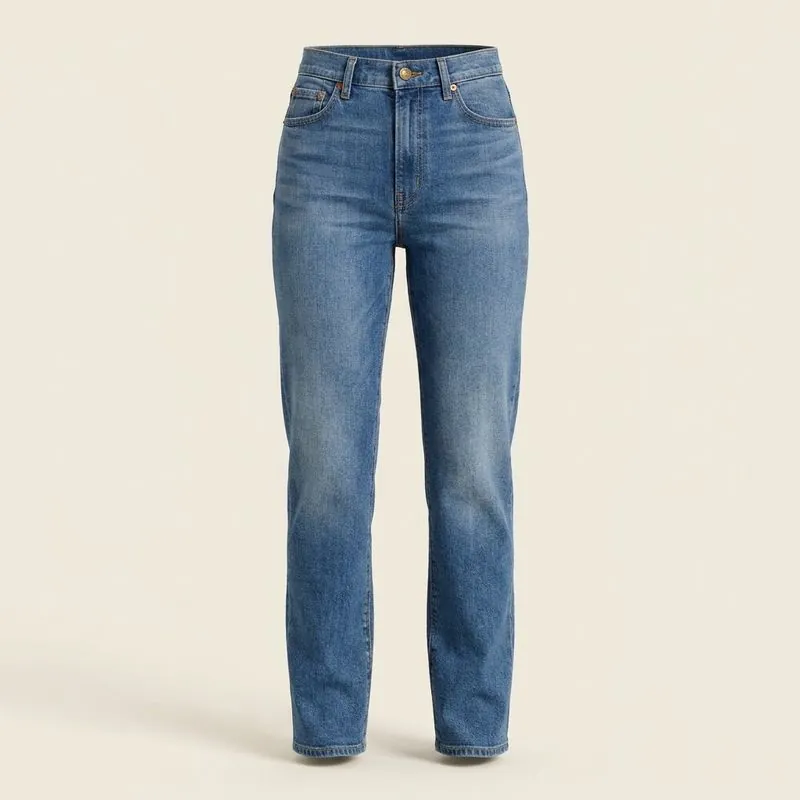
Fit guides usually stop at "one finger in the waistband". That tells you whether the waist is right, not why the rest of the pair isn't. A pattern maker checks jeans at six points, and each point is controlled by one measurement. Know the six and you can tell in two minutes whether a pair fits, and what to change if it doesn't.
The six checkpoints
| Checkpoint | A good fit | Signs it's wrong | Controlled by |
|---|---|---|---|
| Waist | Sits flat; one or two fingers fit inside | Digs in, or gaps at the back | Waist |
| Seat | Follows your shape smoothly | Pulls across, or sags under the seat | Hips / seat and back rise |
| Rise | Waistband stays put when you sit | Slides down or cuts in when seated | Front and back rise |
| Thigh | Room to move without drag lines | Diagonal creases from the crotch | Thigh |
| Knee and leg | Follows the style's line | Bagging at the knee, twisting seams | Knee and leg opening |
| Length | Lands where you want in your shoes | Stacking you didn't want, or ankles showing | Inseam |
If one checkpoint is wrong, look it up in the wrinkle guide.
How tight should jeans be?
It depends on the fabric. Rigid, 100% cotton denim has no give, so it needs a little room and molds to you with wear. Stretch denim has elastane, so it can sit closer and still let you move, and it relaxes a little during the day. A pair that's comfortable straight away in stretch may feel loose by the evening; a rigid pair that's slightly firm at first usually eases. More in stretch vs rigid denim.
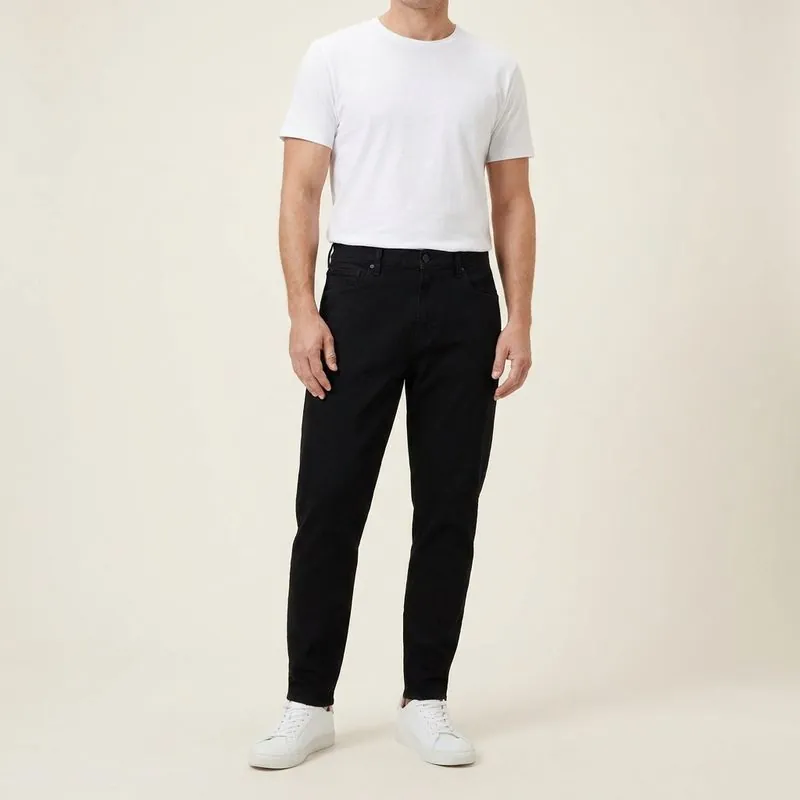
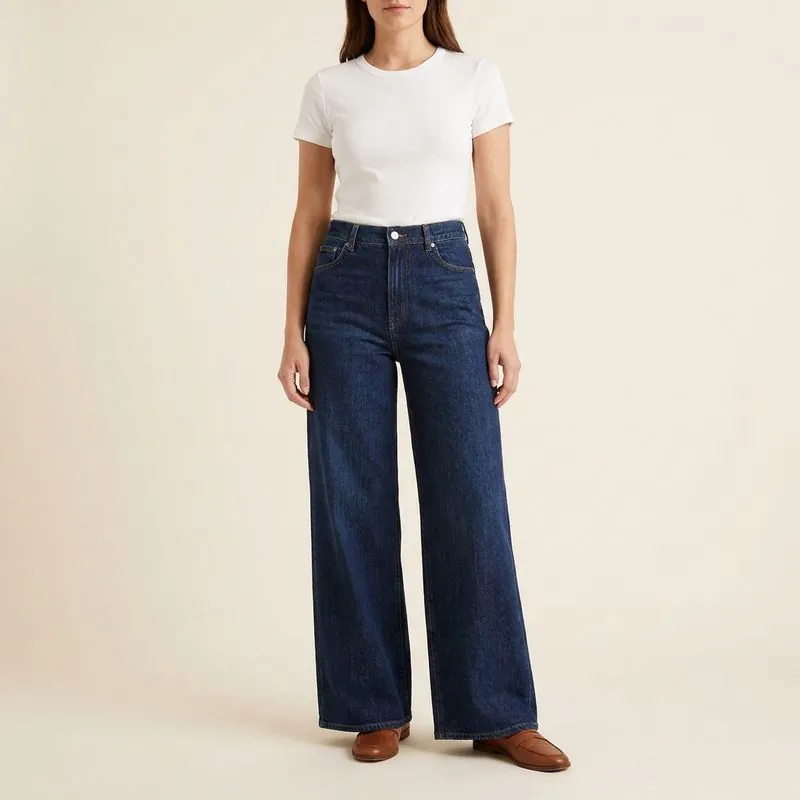
How each style should fit
- Skinny: close all the way down, with no squeeze at the thigh.
- Slim: trim through the thigh, narrowing gently below the knee.
- Straight: straight from hip to hem, with room through the seat.
- Relaxed: roomy seat and thigh, straight leg; never baggy at the waist.
- Tapered: fuller thigh, narrower ankle.
- Bootcut and flare: fitted to the knee, then opening.
- Wide leg, mom and barrel: the fit is at the waist and seat; the leg shape is the style.
See every fit with its measurements on the men's and women's pages.
The 2-minute fitting-room check
- Button up and stand straight: any drag lines at the crotch or thighs?
- Turn and look at the back waistband: a gap?
- Sit down: does the waistband dig in, or drop at the back?
- Squat: tight across the thighs or seat?
- Check the hem in your usual shoes.
Two or more fails from different checkpoints means another size of the same cut won't fix it.
When no size fits
If the waist, seat, thigh and length never come together in one size, the size system is the problem. Jeanszilla cuts each pair from your waist, hips, thigh and inseam, with a snug, regular or roomy fit preference, and checks the numbers before cutting. Why sizes differ between brands explains why.
Questions
How should jeans fit at the waist?
Snug enough to stay up without a belt, with room to slide one or two fingers inside the waistband, and no gap at the back.
How tight should jeans be when you buy them?
Stretch jeans can feel close at first because they relax with wear; rigid cotton jeans need a little room and mold to you over time.
Do jeans loosen as you wear them?
Most do a little. Stretch denim relaxes during the day, and cotton denim softens and shapes to you with wear.
How do I know if jeans are too small?
Drag lines across the crotch and thighs, a waistband that digs in when you sit, and pockets that flare open all mean the jeans are too tight somewhere.
Should jeans be tight or loose?
Neither by default. The waist should be snug, and the rest depends on the style you choose, from close-fitting skinny to roomy relaxed.