The short answer
- Measure your length in the shoes you'll wear most. It matters more than any rule.
- Narrow legs (skinny, slim, tapered) look best with little or no break, or a deliberate stack.
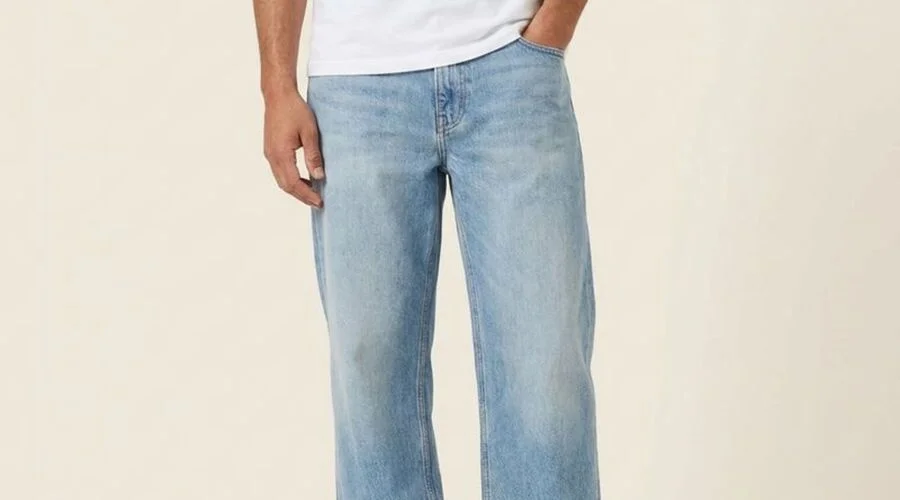
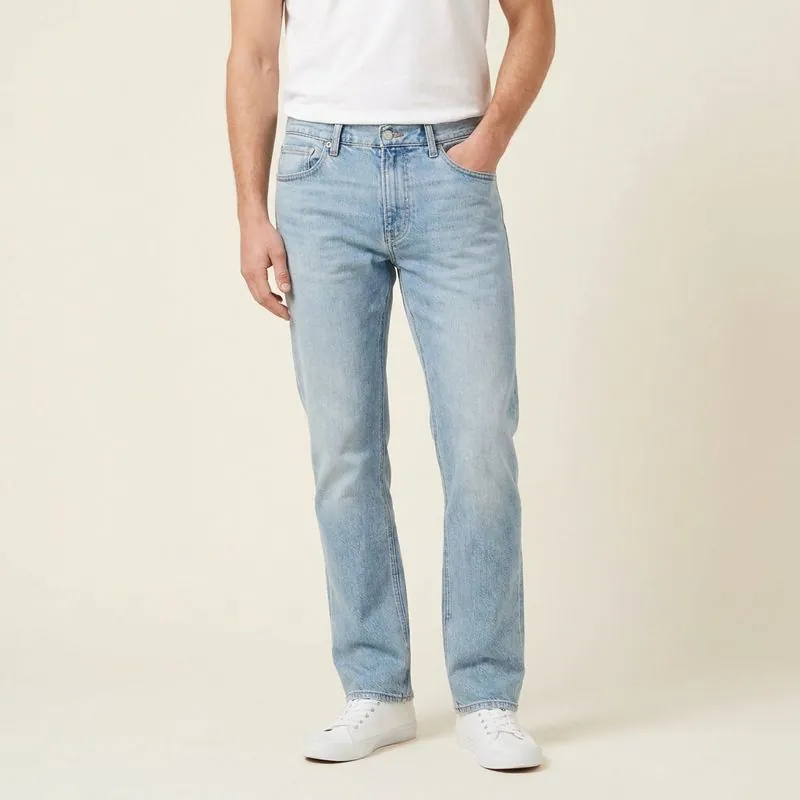
- Straight legs suit a slight break: the hem just touches the top of the shoe.
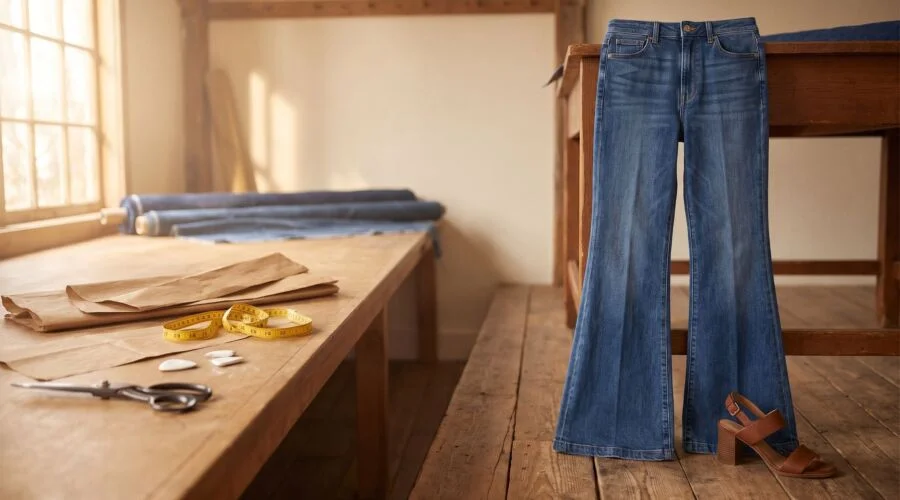
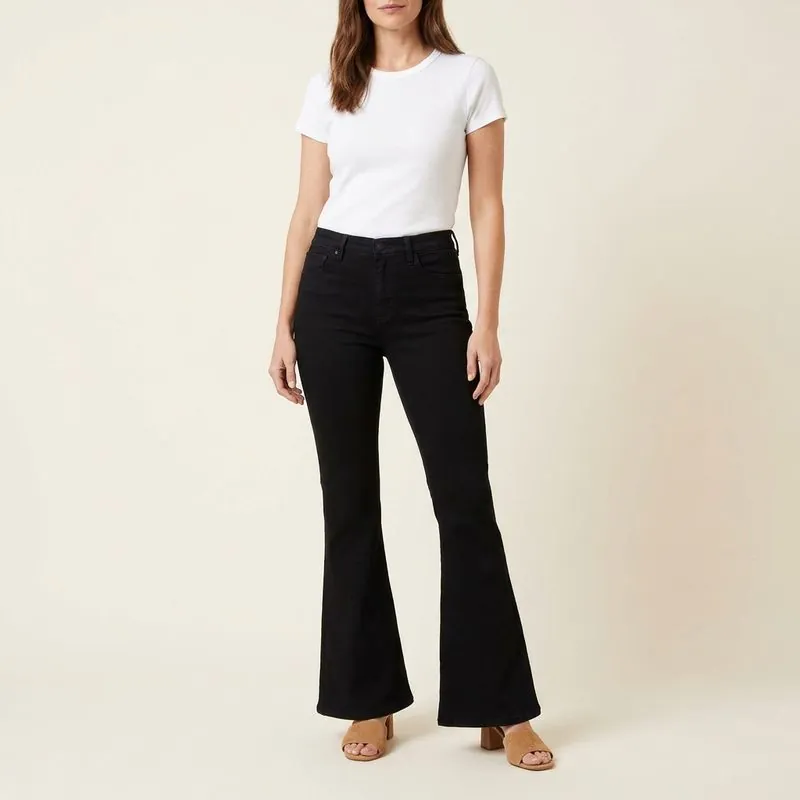
- Bootcut, flare and wide legs are cut longer, to fall over the boot or close to the floor.
"How long should jeans be" sounds like it has one answer. It doesn't. The same inseam can look cropped with heels and sloppy with sneakers, and the width of the leg opening decides whether extra length folds neatly or piles up. Start with the look you want, then measure for it.
Break, stack, crop and cuff: the four lengths
| Look | Where the hem lands | Works best with |
|---|---|---|
| No break / crop | At or just above the ankle bone | Slim, tapered, mom and barrel legs; loafers, low sneakers |
| Slight break | Just touching the top of the shoe, one soft fold | Straight and slim legs; most everyday shoes |
| Full break / stack | Extra length folding at the ankle | Narrow openings only; on a wide leg it just bunches |
| Cuff | Turned up once or twice | Straight legs and raw or selvedge denim, where the edge is part of the look |
Style guidance, not a rule. Choose the break you like.
Length by shoe
Sneakers and flat shoes
A slight break or no break suits most legs. Measure barefoot or in the sneakers you wear most.
Boots
A boot raises your heel and adds bulk at the ankle, so measure wearing the boots. Bootcut jeans are made for this: the leg opens just enough to sit over the shaft. See men's bootcut jeans and women's bootcut jeans.
Heels
Flares and wide legs are usually hemmed for a particular heel height: too short and they look cropped in heels, too long and they drag in flats. Pick the shoes first, then measure. The flare jeans page goes into heel heights.
Why leg opening changes the right length
A narrow opening can hold a stack neatly; a wide one can't, so the extra length just sags. Here are the typical finished leg openings, measured around, for our fits (32" waist for men, 28" for women):
| Fit | Leg opening | Length that tends to work |
|---|---|---|
| Women's skinny | 10.5" | Ankle length or a small stack |
| Men's skinny | 12.5" | No break or a small stack |
| Men's athletic taper | 13.5" | No break to slight break |
| Men's slim | 14" | Slight break |
| Women's straight | 15" | Ankle length or slight break |
| Men's straight | 16" | Slight break, or cuffed |
| Men's and women's bootcut | 18.5" | Over the boot |
| Women's flare | 22" | Close to the floor in your heels |
| Women's wide leg | 24" | Close to the floor |
Every pair is cut from your own measurements; these show how the fits differ.
How to measure for the length you want
- Put on the shoes you'll wear most with the jeans.
- Find a pair whose length you like and measure from the crotch seam down the inside leg to the hem. That's your inseam.
- No pair like that? Measure your body from the crotch down the inside leg to where you want the hem, with a helper.
- For a cuff, decide how many turns you want and allow for it, or describe it in the notes when you order.
Why charts can't do this for you is covered in inseam by height. Long or short legs? See jeans for tall men, jeans for shorter men and petite jeans.
Questions
Should jeans touch the floor?
Only wide-leg and flared styles, and only just, in the shoes you'll wear. Most other jeans should end at or just above the top of the shoe.
How much break should jeans have?
Most people choose no break or a slight break, where the hem just touches the shoe. A full stack only works with a narrow leg opening.
How long should jeans be with boots?
Long enough to cover the top of the boot when you stand. Measure wearing the boots; bootcut jeans are designed to sit over them.
Is it better for jeans to be too long or too short?
Slightly long is easier: a tailor can hem them, or you can cuff them. Jeans that are too short can't be lengthened.
How do I stop jeans stacking too much?
Choose a shorter inseam or a narrower leg opening. Extra length on a wide opening sags rather than stacking.