The short answer
- A pair that almost fits is the easiest starting point: measure it flat, double the widths, and you have a pattern brief.
- Waist, hips, thigh, knee, opening, inseam and rise all copy across. Feel doesn't, if you change the fabric.
- Write down what you'd change before you measure, so the numbers and the notes agree.
- Worn-out pairs have stretched: measure them buttoned and smoothed, and say how old they are.
You probably already own the most useful fitting tool there is: the pair you reach for first. It fits you in ways no size chart describes. Copying it isn't about cloning every flaw; it's about keeping what works and fixing the one or two things that bother you. Here's how to do it so the next pair comes out better, not just the same.
Step 1: decide what you'd change, before you measure
Put the jeans on and run the six-checkpoint fit check. Write one line for each point you'd change: "a little tight in the thigh when I sit", "half an inch too long in sneakers", "slight gap at the back". Do this first, because once you're holding a tape measure it's tempting to trust the numbers and forget the feeling.
Step 2: measure the pair flat
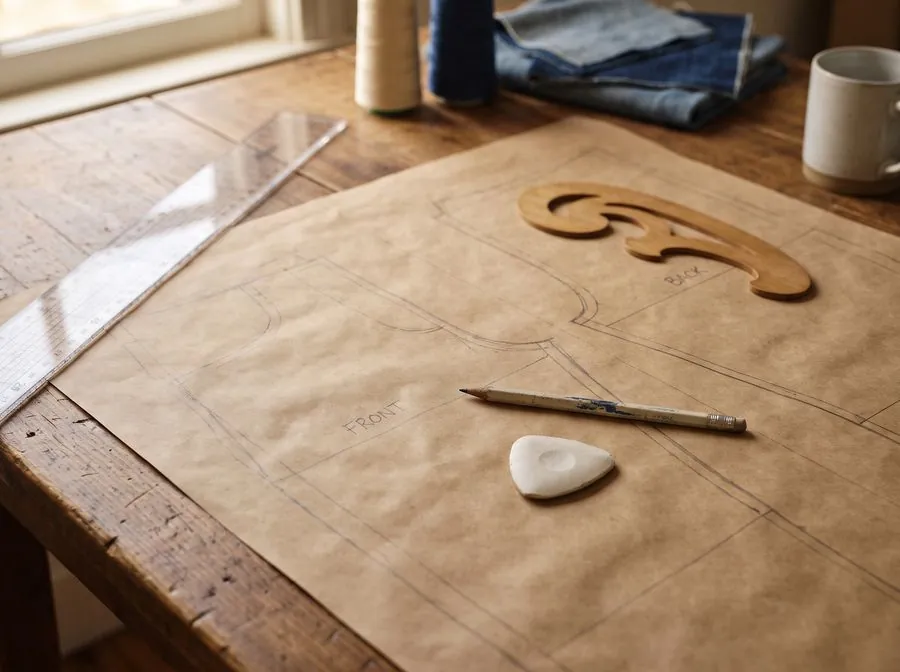
Button the jeans, lay them on a table front up, and smooth them without stretching. Measure straight across and double every width:
| Measurement | Where on the flat pair | Double it? |
|---|---|---|
| Waist | Across the top of the waistband, edge to edge | Yes |
| Hips / seat | Across the widest part, about 7" below the waistband | Yes |
| Thigh | Across one leg, 1" below the crotch seam | Yes |
| Knee | Across one leg, 14" below the crotch seam | Yes |
| Leg opening | Across the hem | Yes |
| Inseam | Crotch seam down the inside leg to the hem | No |
| Front rise | Crotch seam up to the top of the front waistband | No |
| Back rise | Crotch seam up to the top of the back waistband | No |
These match the measuring guide. Measure twice; if the two numbers differ by more than a quarter inch, measure a third time.
Step 3: know what copies across, and what doesn't
| Copies exactly | Needs a decision | Doesn't copy |
|---|---|---|
| Inseam and rise | Waist, if it has stretched with wear | How a different fabric feels |
| Thigh, knee and opening | Length, if you'll wear different shoes | Fading and softness from years of wear |
| Hip width | Anything on your "change" list | A shape that came from shrinkage |
The big one is fabric. A pair in high-stretch denim can measure smaller than you'd guess and still be comfortable. If you copy those numbers into a rigid fabric, the same widths will feel tight, because rigid cotton has no give. Tell us the fabric your pair is made of (check the care label for elastane), and choose your new fabric knowing that. Stretch vs rigid denim explains the difference, and what is ease explains why the numbers move.
Step 4: write tailor notes that work
Every Jeanszilla order has a "notes for your tailor" box of up to 500 characters. Good notes are specific, say which direction, and give a size of change:
- Good: "Copied from my favorite pair (2% stretch). Keep everything, but 1 inch longer and a little more room in the thigh."
- Good: "Back waistband gaps about 1.5 inches when I sit."
- Too vague: "Make them fit better."
- Contradictory: a thigh number smaller than your old pair with a note asking for more room. Change the note or the number, not both.
When copying isn't the right method
- The pair has stretched out or shrunk badly. Measure your body instead, or use both and let the pattern maker compare.
- It never fit: if your favorite is only a favorite because it's the least bad, start from body measurements.
- You're changing style completely: copying a skinny pair into a wide leg only carries over the waist, hips and inseam. Choose the new fit and use your body numbers for the rest.
- Kids: copying works, but add room to grow. See kids' jeans for the grow-room hem.
What happens next
Choose your fit on the men's or women's pages, pick "copy your best-fitting jeans" as your measuring method, and enter the numbers plus your height and weight. Within 1 working day a pattern maker compares them and emails you before cutting if anything looks unusual. Your first pair in each fit is covered by the Fit Guarantee, and once a fit is right, reorders use the same pattern.
Questions
Can you copy a pair of jeans exactly?
The measurements, yes: waist, hips, thigh, knee, opening, inseam and rise. The feel only copies if the fabric is similar.
Do I measure jeans flat or around?
Flat, then double the widths: waist, hips, thigh, knee and leg opening. Inseam and rise are measured along the seam and not doubled.
What if my favorite jeans have stretched?
Measure them buttoned and smoothed, and say in the notes how old they are. The pattern maker can compare them with your height and weight.
Should I copy stretch jeans into rigid denim?
You can, but the same numbers will feel tighter in rigid fabric. Tell us both fabrics in the notes, or choose a regular or roomy fit preference.
What should I write in the notes for my tailor?
What you'd change, which direction and by roughly how much, for example "1 inch longer, a bit more room in the thigh".