The short answer
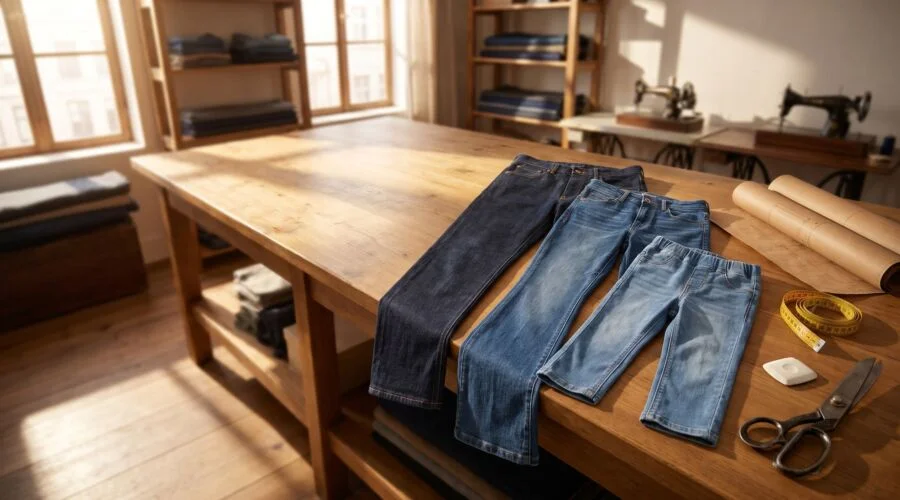
- There are two kinds of jeans measurement: body (around you, with a soft tape) and garment (the finished jeans, often laid flat).
- The garment is always a little bigger than the body. The difference is ease, and it changes with fit and fabric.
- Flat garment widths are half the circumference. Double them before comparing with a body number.
- Waist and inseam are what a store size gives you. Thigh, seat and rise are where most fit problems live.
Size charts throw a lot of words around: seat, rise, outseam, opening. Some describe your body, some describe the jeans, and many charts don't say which. That's how people end up comparing a 16" flat thigh with a 24" body thigh and deciding nothing fits. Here's every common jeans measurement, defined once, with the body and garment versions side by side.
Body or garment? Know which you're reading
A body measurement is taken around you with a soft tape. Clothing standards define these carefully; the international reference is ISO 8559-1, which sets out how body measurements for clothing should be taken (ISO). A garment measurement is taken on the finished jeans, and it's bigger than your body by design, because jeans need room to move. That gap is called ease, explained in what is ease in jeans.
The glossary
| Measurement | On your body | On a pair laid flat | At Jeanszilla |
|---|---|---|---|
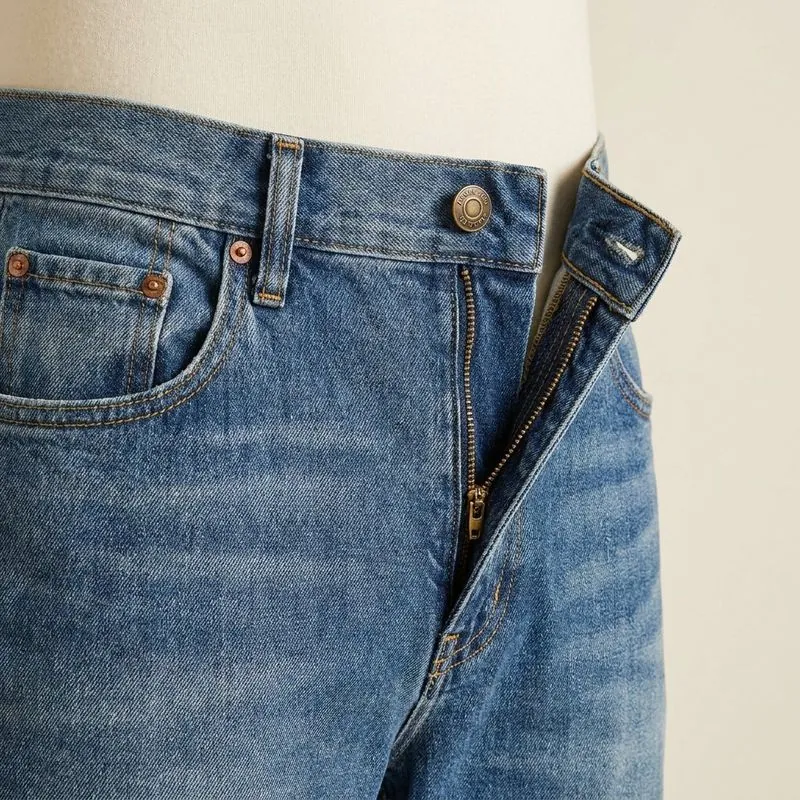
| Waist | Around where you want the waistband to sit; just below the navel for a mid rise | Across the top of the waistband, doubled | Required |
| Hips / seat | Around the fullest part of your seat, feet together | Across the widest part, about 7" below the waistband, doubled | Required |
| Thigh | Around the fullest part of one thigh, just below the crotch | Across one leg, 1" below the crotch seam, doubled | Required |
| Inseam | Crotch down the inside leg to where you want the hem | Crotch seam down the inside leg to the hem | Required |
| Knee | Around the knee, leg slightly bent | Across one leg, 14" below the crotch seam, doubled | Optional |
| Leg opening | Not a body measurement | Across the hem, doubled | Optional |
| Front rise | Not usually taken on the body | Crotch seam up to the top of the front waistband | Optional |
| Back rise | Not usually taken on the body | Crotch seam up to the top of the back waistband | Optional |
| Outseam | Waist down the outside of the leg to the hem | Top of the waistband down the side seam to the hem | Not used: inseam and rise give the same information more precisely |
Height and weight are also required at Jeanszilla: they let the pattern maker sense-check the other numbers.
The numbers people mix up most
Waist size vs waist measurement
The "32" on a label is a size, not necessarily a measurement. Many brands' 32s measure bigger than 32 inches at the waistband, which is why the same size fits differently between labels. The full story is in why jeans sizes differ between brands.
Hips vs seat
Mostly the same thing in jeans: the widest circumference around your bottom. Some charts use "hip" higher up, around the hip bones, so check where a chart says to measure.
Inseam vs outseam
Inseam is the inside leg, crotch to hem. Outseam is the outside, waist to hem, so it equals inseam plus rise, roughly. Two pairs with the same inseam can have different outseams because their rises differ. The inseam is the one to trust; the inseam guide shows how to find yours.
Front rise vs back rise
The back is always longer, because it curves over your seat. Details in front rise vs back rise.
Flat vs around
A flat width is half the circumference. A 16" around leg opening is 8" flat. More in leg opening explained.
Which measurements matter for which problem
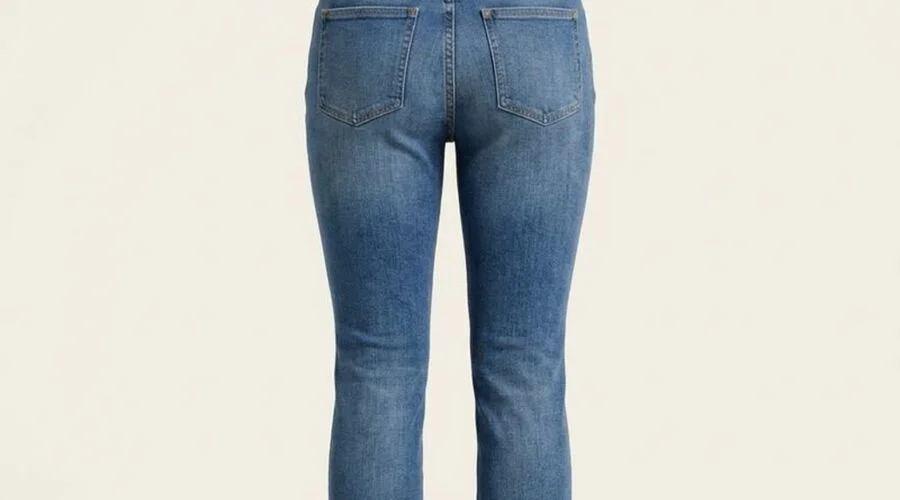
- Gap at the back: waist and hips, as separate numbers, and back rise.
- Tight thighs: thigh, measured at the fullest point.
- Waistband drops when you sit: back rise.
- Too long or short: inseam, in the shoes you'll wear.
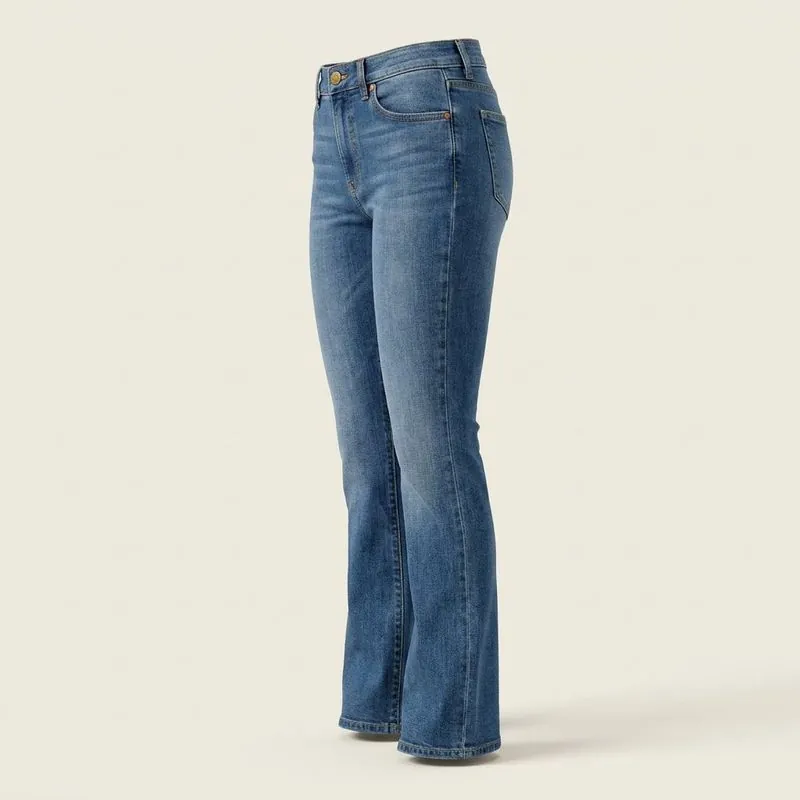
- Leg shape looks wrong: knee and leg opening.
Three ways to give us your numbers
At Jeanszilla you can copy your best-fitting jeans measured flat (the easiest), measure your body, or give your height, weight and usual size. Choose a fit preference of snug, regular or roomy, and the ease is added for the style and fabric, so don't add any yourself. The step-by-step version is the measuring guide, and the method for copying a pair is in how to copy your favorite jeans.
Or browse men's styles and kids' styles.
Questions
What measurements do I need for jeans?
Waist, hips, thigh and inseam cover most of the fit. Knee, leg opening and front and back rise fine-tune it.
Is jeans waist size my actual waist?
Not always. Many brands' labelled waist sizes are smaller than the real waistband measurement, so measure rather than trust the label.
What is the difference between inseam and outseam?
Inseam runs down the inside leg from the crotch to the hem. Outseam runs down the outside from the waistband, so it includes the rise.
Where do you measure the thigh on jeans?
On a flat pair, across one leg 1" below the crotch seam, then double it. On your body, around the fullest part just below the crotch.
Why is my body measurement smaller than my jeans measurement?
Jeans include ease, extra room so you can sit and move. The amount depends on the fit and fabric.