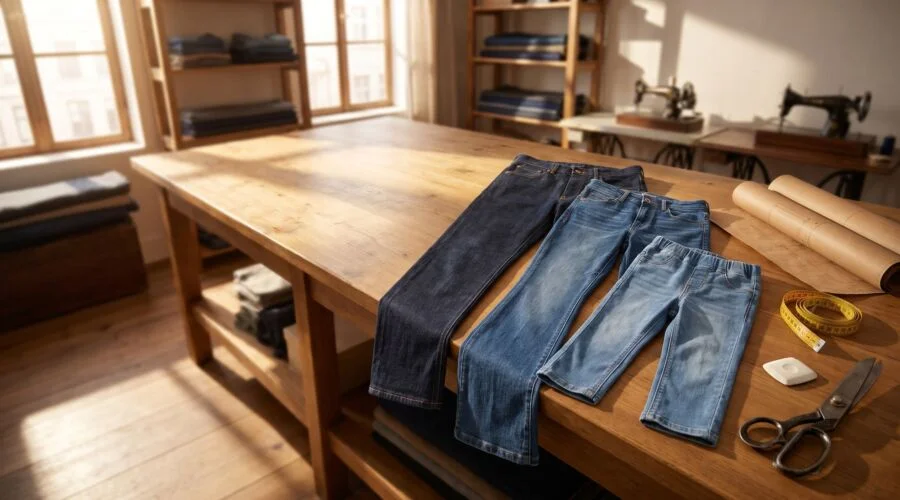
The short answer
- Rise is the distance from the crotch seam to the top of the waistband. Front rise is measured up the fly, back rise up the seat seam.
- The back rise is always longer, because it has to travel over your seat.
- Low, mid, high and ultra high describe where the waistband lands: from well below the navel to above it.
- A waistband that digs in when you sit, or drops at the back, is a rise problem, not a waist problem.
Most size charts give you a waist and an inseam and leave the rise as one vague word. But rise decides where the waistband sits, whether jeans stay put when you sit down, and how long your legs look. It's also two numbers, and the difference between them explains a lot of fit problems.
What front rise and back rise measure
Lay a pair of jeans flat. The front rise runs from the crotch seam, where the four seams meet, up the fly to the top of the front waistband. The back rise runs from the same point up the center-back seam to the top of the back waistband. Together they make the curve that wraps between your legs and around your body.

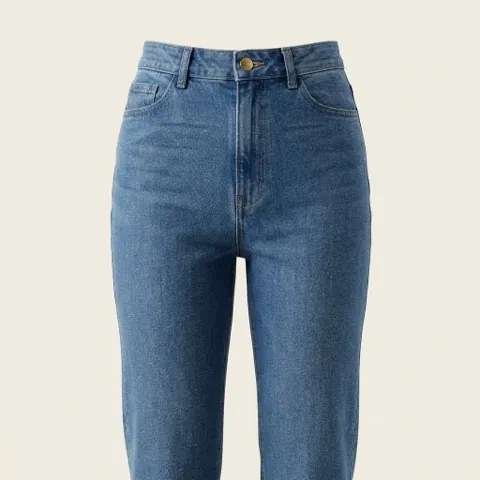
Why the back is always longer
The front of your body is fairly flat from the waist down. The back isn't: the seam has to curve out over your seat and back in under it. So the back rise is longer and its curve is deeper than the front. The more your seat projects, the more length the back needs. This is why two people with the same waist and hips can need different jeans: one needs extra back rise so the waistband doesn't drop when they sit, the other needs less so there's no loose fabric under the seat.
The "front to back" difference is the number to watch. A pair that feels right at the front but slides down at the back when you sit is short in the back rise. A pair with spare fabric bagging under the seat has too much. The back gap guide covers the waistband side of that problem.
Low, mid, high and ultra high: where each one sits
| Rise | Where the waistband lands | Good for | Think twice if |
|---|---|---|---|
| Low | On the hips, well below the navel | Short torsos; tops worn untucked | You sit a lot, or dislike a waistband that drops at the back |
| Mid | Just below the navel | Most bodies and most fits | You want to tuck in or lengthen your legs visually |
| High | At the navel | Tucked tops, wide and barrel legs, longer-looking legs | Your torso is short; it can feel like the waistband is at your ribs |
| Ultra high (women) | Above the navel | A defined waist with flares, wide legs and mom jeans | You bend and sit all day and dislike pressure at the stomach |
Rise names vary by brand; describe where you want the waistband to land rather than relying on a label.
Which rises suit which fits
Each of our fits is drafted for certain rises. Men's skinny comes in low or mid; slim, athletic taper and bootcut in mid; straight and relaxed in mid or high. For women, skinny runs from low to ultra high, bootcut from low to high, straight in mid or high, flare, wide leg and mom in high or ultra high, and barrel in high. You can compare them on the women's and men's pages, where the rise chooser sits on each product. If you're deciding how low to go, the low-rise guide covers built-low vs worn-low.
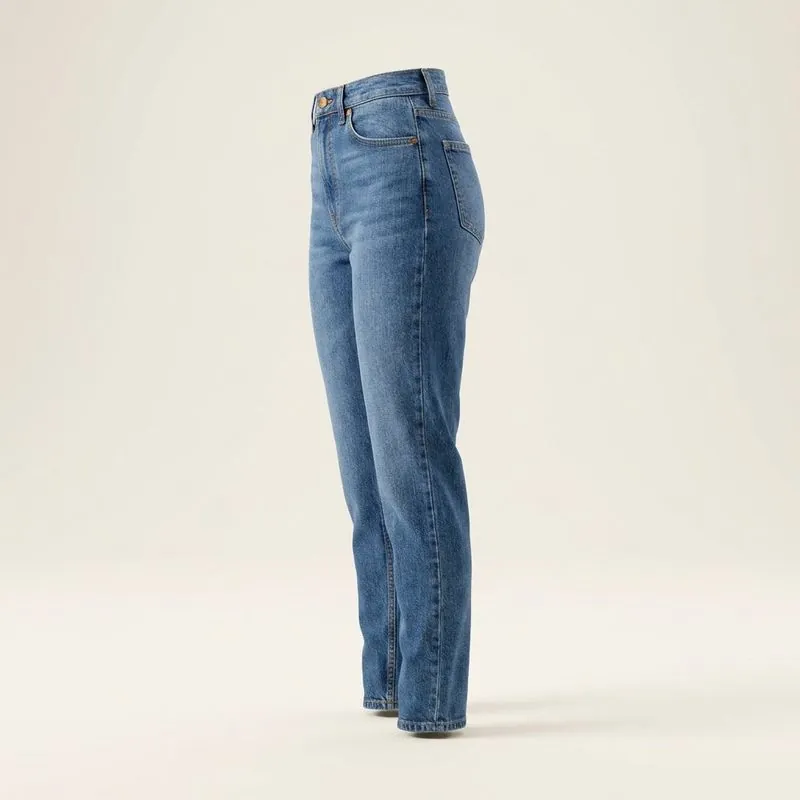
How to measure the rise of a pair you like
- Button the jeans and lay them flat, front up.
- Find the crotch point, where the inseams and the rise seams cross.
- Front rise: measure from there along the seam, following its curve, to the top of the front waistband.
- Turn the jeans over. Back rise: measure from the same point up the back seam to the top of the back waistband.
- Write both down. The difference matters as much as either number.
Front and back rise are optional fields on a Jeanszilla order; waist, hips, thigh, inseam, height and weight are the required ones. If you have a pair whose rise you love, enter both numbers. If not, choose the rise level and tell us in the notes for your tailor what's gone wrong before ("waistband drops at the back when I sit"). The full method is in the measuring guide, and every measurement is defined in jeans measurements explained.
Questions
What is the difference between front rise and back rise?
Front rise runs from the crotch seam up the fly to the front waistband; back rise runs up the seat seam to the back waistband. The back is longer because it curves over your seat.
How much longer is back rise than front rise?
It depends on the cut and the body. A projecting seat needs a bigger difference; a flatter seat needs less. Measure a pair that sits right.
Why do my jeans slide down at the back when I sit?
The back rise is too short for your seat, so sitting pulls the waistband down. A higher rise or a longer back rise fixes it.
Does a high rise make legs look longer?
It usually does, because the leg line starts higher. It works best when the length is right and the hem doesn't stack.
Where should mid-rise jeans sit?
Just below the navel, which is also where we suggest measuring your waist for a mid rise.