The short answer
- Turn jeans inside out, close the fly, and wash cold on a gentle cycle with a mild detergent.
- Skip the dryer. Hang them to dry in the shade, still inside out.
- Wash dark jeans alone or with dark colors, especially the first few times.
- Raw denim gets a cold hand wash; stretch denim hates high heat; black denim is the fastest to show wear.
Indigo is a surface dye: it coats the outside of the cotton yarn and leaves the core paler. That is why denim fades at all, and why the things that rub the surface away (friction, heat, strong detergent, sunlight) are the things to cut back on. You don't need special products. You need the same washer, set differently.
The four-step routine
- Inside out, fly closed. The rubbing happens on the outside of the fabric as clothes tumble against the drum and each other. Turning jeans inside out moves that wear to the inside face, and closing the zip stops its teeth snagging anything. This is also the first thing the denim maker Levi Strauss recommends in its care guide.
- Cold water, gentle cycle. Cold water releases less dye and is less likely to shrink cotton. A gentle or delicates cycle means less agitation, so less abrasion.
- Mild detergent, a little less of it. A detergent for darks is a good choice for dark washes. Skip bleach and "brightening" boosters, which are built to strip color from stains and don't know the difference.
- Air dry, out of direct sun. The dryer adds heat and more tumbling. Hang by the waistband or fold over a rail, inside out, in the shade.
The routine is also cheaper to run. In its own life-cycle study, the same company found that in the US a cold wash cuts the non-renewable energy of washing by 21%, and line-drying instead of using the dryer cuts it by 64% (Levi Strauss & Co. life-cycle insights).
The routine by fabric
All denim follows the four steps. Each fabric adds one or two rules of its own.
| Fabric | What to add | What to avoid |
|---|---|---|
| Rigid (100% cotton) | Pull the seams straight while damp so it dries flat; it will feel stiff for an hour of wear, then soften | Hot water and the dryer, which shrink cotton |
| Stretch (with elastane) | Cold wash and air dry every time | High dryer heat, which is hard on the stretch fiber and its recovery |
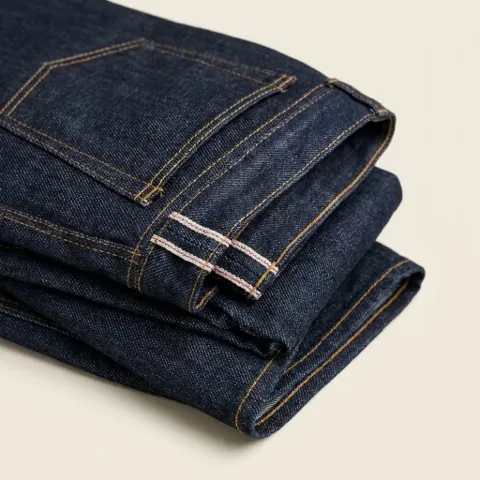
| Raw / unwashed denim | Wait as long as you comfortably can before the first wash, then hand wash cold in a tub with a gentle cleanser, soaking rather than scrubbing | Machine agitation on the first wash; it sets random creases |
| Black and grey | Wash with other darks, inside out, and as rarely as you can | Sun-drying and long hot cycles |
| Light wash, bleached, ecru | Wash with lights; pre-treat stains straight away | Washing with new dark denim, which can transfer dye |
Always check the care label first. If it disagrees with this table, follow the label.
The first wash of a dark pair
New dark denim can bleed for the first few washes. Wash it alone, or with old darks, and don't sit on a pale sofa in it on day one. If you are washing raw denim for the first time, read raw denim shrinkage and break-in before you start, because the first soak is also when most of the shrinkage happens.
One timing note for a new made-to-measure pair: try it on before the first wash. The Fit Guarantee covers the first pair in each fit when you tell us within 30 days of delivery and the jeans are unworn and unwashed.
When fading is fine (and when to stop fighting it)
Some fading is the point of denim: whiskers at the hips and paler knees are a record of how you move. If you want a light, lived-in look from day one, it's easier to choose a lighter wash than to wash a dark pair into it; see denim washes explained for how each one ages. The routine above is for people who want dark jeans to stay dark, and for keeping every pair from looking tired before its time.

Quick myths
- "Salt or vinegar sets the dye." Factory-dyed indigo is already as fixed as it's going to be. The habits above do more.
- "Never wash jeans." You can wash less, but not never; see how often to wash jeans.
- "Hot water gets them cleaner." For everyday wear, cold with a decent detergent cleans jeans well, and hot water mainly costs you color and size. See do jeans shrink?
Or browse women's styles, or start with men's straight or women's straight jeans.
Questions
Should you wash jeans inside out?
Yes. Most of the abrasion in a washer happens on the outer face of the fabric, so turning jeans inside out keeps the visible side darker for longer.
What temperature should I wash jeans at?
Cold. It releases less dye and is less likely to shrink cotton than warm or hot water.
Can I put jeans in the dryer?
You can, but heat and tumbling speed up fading and can shrink cotton or tire out stretch fibers. Hanging them to dry in the shade is better for every kind of denim.
How do I stop new jeans bleeding dye?
Wash them alone or with other dark clothes for the first few washes, in cold water. Some transfer is normal with deep indigo and black, and it eases over time.
Does a detergent for dark colors make a difference?
It helps a little, mainly because those detergents avoid optical brighteners and bleach-type boosters. The bigger wins are cold water, inside out and no dryer.