The short answer
- Organic cotton is grown without most synthetic fertilisers and pesticides, and without genetically engineered seed.
- Certification schemes check different things: some only track organic content, others also cover dyeing, chemicals and working conditions.
- Organic cotton feels like cotton. Softness comes from the yarn, weave, weight and finish.
- To trust a claim, look for the named standard and the certified percentage, not just the word "organic".
"Organic" is one of the most-used words on clothing labels and one of the least explained. On denim, it describes the cotton fiber and how it was farmed. It says nothing about how the fabric was dyed or finished unless a certification scheme covers those steps too. Here's how to read it.
What makes cotton organic
In the US, organic crops are grown under the USDA's National Organic Program. Its rules prohibit synthetic fertilisers, sewage sludge, irradiation and genetic engineering, and the land must have had no prohibited substances applied for three years before harvest (USDA organic standards; USDA: Organic 101). Organic doesn't mean "no pest control at all": growers can use a short list of approved substances. Other countries have their own equivalent rules.
That covers the field. A pair of jeans also goes through spinning, dyeing, weaving, finishing and sewing, and that's where the textile certification schemes come in.
The certification schemes, compared
Two textile standards appear on most organic denim labels. They answer different questions.
| Organic Content Standard (OCS) | Global Organic Textile Standard (GOTS) | |
|---|---|---|
| What it verifies | That organic fiber is present and tracked from farm to product | Organic fiber plus how the textile is processed |
| Organic content | Covers products with 5% to 100% organic material | Higher minimum; restricts which other fibers can be blended |
| Dyeing and chemicals | Not assessed | Restricts chemical inputs; requires wastewater treatment |
| Working conditions | Not assessed | Includes social criteria |
| Who's checked | Each company handling the product (chain of custody) | Each processing and trading stage, with annual audits |
Sources: Intertek on OCS, Global Standards on GOTS and the Textile Exchange FAQ comparing the two, which notes GOTS's 70% minimum and extra processing rules. Check the current standard documents if a specific threshold matters to you.
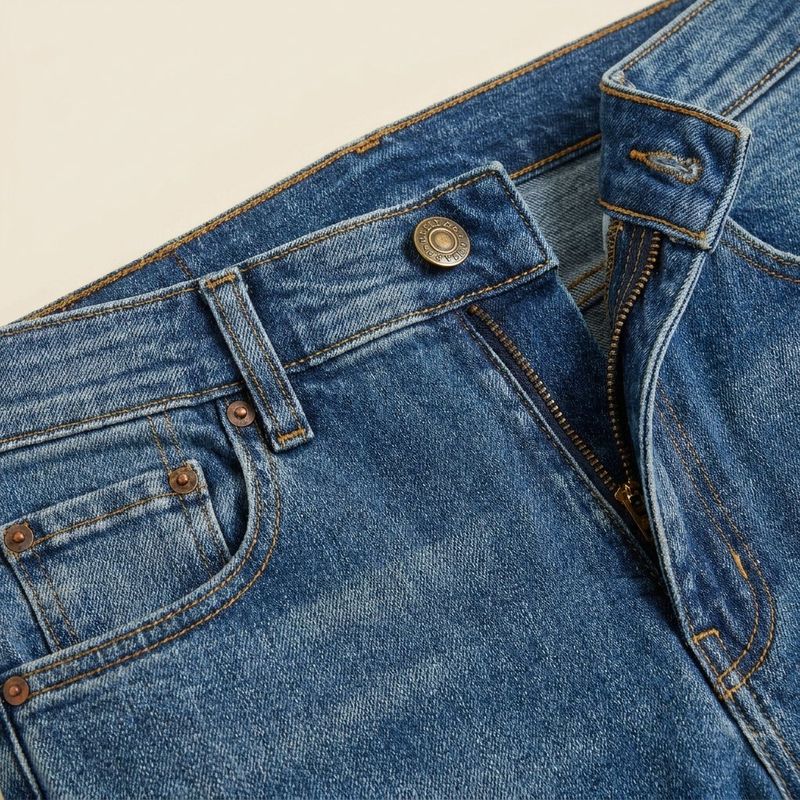
Does organic denim feel different?
Not because it's organic. A cotton fiber is a cotton fiber; what you feel is the yarn, the weave, the weight and the wash. An organic stretch denim and a conventional stretch denim of the same weight and blend should feel much the same. If a pair feels softer, credit the finishing.
Price is a different story. Organic cotton is a smaller part of the cotton supply, and keeping it separate and certified through each stage costs money. That's why organic options usually carry a premium.
Reading a label: a checklist
- Is a standard named (for example GOTS or OCS), or does it just say "organic"?
- Is there a certifier or licence number you could look up?
- What percentage is organic, and what's the rest (conventional cotton, elastane, polyester)?
- Does the claim cover the fabric, or the finished product?
- If dyeing chemicals or factory conditions are what you care about, does the standard cover those at all?
When organic isn't the deciding factor
- You need maximum stretch. For a close, flexible fit, a high-stretch fabric may suit you better. See stretch vs rigid denim.
- You want rigid structure. If you love a firm, all-cotton pair, a rigid fabric will give you that more directly.
- You're paying for a certified claim. Then buy a product that names its standard and percentage.
- Fit matters most. The pair you wear for years does more good than the pair that sits in a drawer.
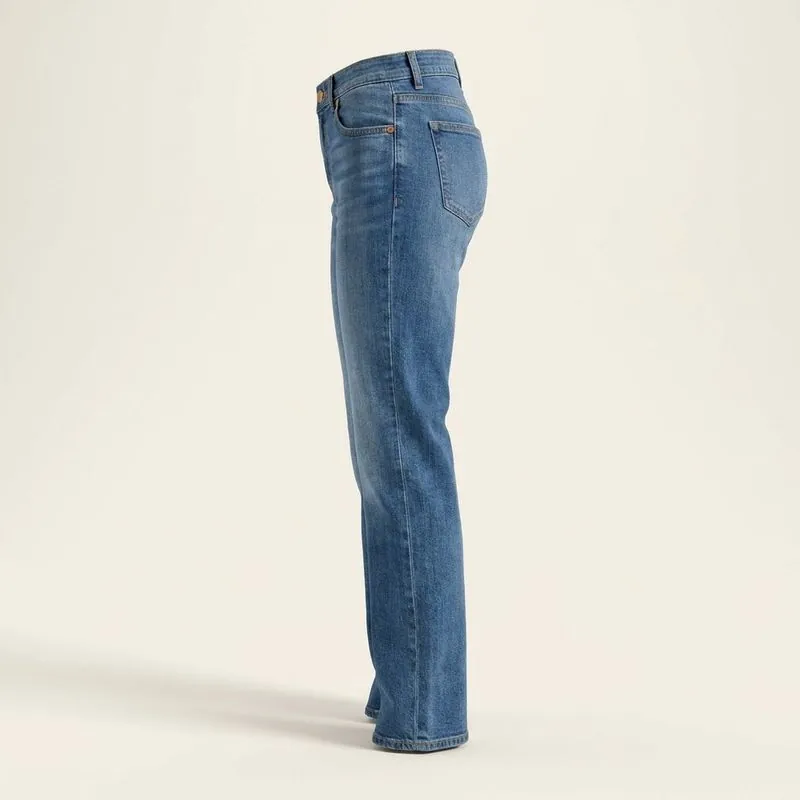
Our Organic Cotton Stretch option
Jeanszilla's Organic Cotton Stretch is an 11.5 oz stretch denim (+$15). We don't state a certification scheme or an exact elastane percentage for it here, so if either is important to your decision, ask us before you order. It sits between Comfort Stretch (11 oz, 2% elastane) and Classic Rigid (13 oz) in weight, and it works well in everyday cuts like women's straight and men's slim. For how the weights compare, read the denim weight guide.
Or browse men's styles.
Questions
Is organic cotton denim more durable?
Not because it's organic. Durability comes from fiber length, yarn, weave, weight and how the jeans fit and are washed.
Is organic denim free of chemicals?
No textile is made without any chemistry; indigo dyeing itself needs chemical steps. Some standards, such as GOTS, restrict which chemicals can be used in processing; others only verify the organic fiber.
Can stretch denim be organic?
Yes. The cotton can be organic while a small amount of elastane provides stretch. Standards differ on how much non-organic fiber they allow.
Why does organic denim cost more?
Organic cotton is a smaller part of the cotton supply, and keeping it separate and certified through each stage adds cost.
Is your Organic Cotton Stretch certified?
We don't state a certification for it on this page. If certification matters to you, ask us before you order.