The short answer
- Heat is the lever: a hot wash followed by a hot dryer is the standard method for 100% cotton jeans.
- Stretch denim and denim that was pre-shrunk at the mill respond far less, and high heat can damage the stretch fiber.
- Think in fractions of a size, not a whole size. Jeans tend to shrink more in length than in the waist.
- To fix just the waistband or one area, spot-shrink it with a damp cloth and an iron instead of treating the whole pair.
- If the jeans are a size too big, a tailor taking in the back waist or a new pair cut to your numbers is the more reliable answer.
Our post on whether jeans shrink explains why. This one is the how-to: what to do if you want a pair to come back smaller, and when it isn't worth trying. First, measure the jeans flat (waist across the top of the waistband doubled, inseam, thigh) and write the numbers down. Without a starting figure you cannot tell what changed.
What will and won't shrink
Cotton fibers relax and contract when they get wet and hot. How much a pair shrinks depends on what it is made of and how it was finished before it reached you.
| Your jeans | Will heat shrink them? | What to expect |
|---|---|---|
| 100% cotton, washed rigid | Some | Modest change; mostly length, a little waist |
| Raw, unsanforized "shrink-to-fit" | Yes, the most | Noticeable, mainly length first |
| Pre-shrunk (sanforized) denim | Very little | The mill has already done the shrinking, so a second round gains little |
| Stretch denim with elastane | A little, and not worth the risk | Heat is hard on the stretch fiber; the jeans may feel tight, then relax with wear |
Sanforization is a mechanical pre-shrinking process patented in 1930 (Sanforized). We can't give you a reliable figure for any single pair: the amount varies by fabric, wash history and how hot you go. Measure before and after.
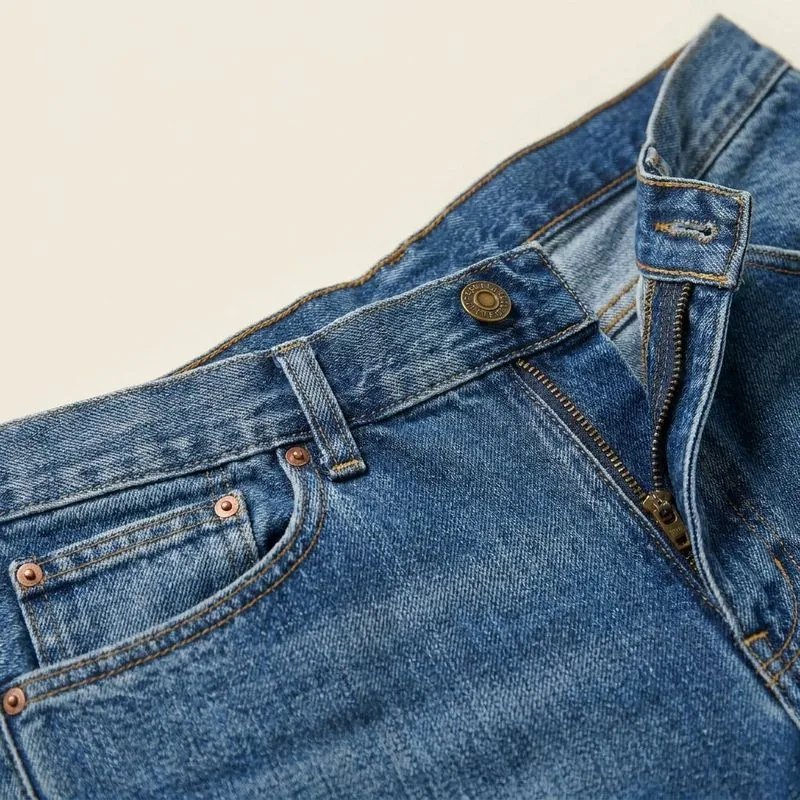
Method 1: hot wash and hot dryer (the whole pair)
- Wash the jeans alone, in hot water. Levi Strauss, which sells jeans designed to shrink, describes a hot wash followed by a full run in the dryer as the basic method, and says the dryer's heat will shrink them well (Levi Strauss on shrinking jeans).
- Dry on high heat until completely dry. The tumbling matters as much as the temperature.
- Put them on while slightly warm and move around. Cotton relaxes with wear, so judge the fit after an hour, not straight out of the dryer.
- Measure again. Repeat only if you have to, because each cycle ages the fabric.
Expect the color to fade a little and the jeans to lose some of their surface finish. Dark and black washes show it most. If color matters, our guide to washing jeans without fading covers what hot water does.
Method 2: spot-shrink the waistband or one leg
Levi Strauss also describes a spot method for small areas such as the waistband, knees or seat: dampen the area and iron it until dry (same page). In practice:
- Turn the jeans inside out and lay a thin cotton cloth over the area so the iron never touches the denim directly.
- Spray the section until damp, not soaked, then press with a hot, dry iron on the cotton setting until the fabric is dry.
- Keep the iron moving. For stretch denim use a lower setting; scorching and shine are the risks.
The gain is small. It is a tweak for a waistband that gaps by a fraction, not a fix for jeans that are a size too big.
The damage risk
- Stretch loss. Repeated high heat can degrade the elastane, so a pair that fits snugly today may bag out faster. For stretch denim, heat is the thing to avoid.
- Uneven result. Legs can end up shorter before the waist moves much. If the jeans are already the right length, shrinking can trade a loose waist for a short hem.
- Wear. Hot washing and drying age denim faster. Levi Strauss itself points out that washing and drying wear jeans out.
- Do not boil jeans casually. One brand describes a 30-minute boil. It means a large pot of scalding water and tongs; for most people the hot wash does the same job more safely.
When shrinking is the wrong answer
If the waist is more than a little loose, if the thighs are right but the waist gaps, or if the jeans never fit well anywhere, shrinking treats the symptom. A tailor can take in the back waist, and that is usually cleaner than trying to cook the fabric. If you keep buying sizes that fit your hips and gap at the waist, that is a cut problem, covered in our guide to altering jeans or going custom.
A pair made to your own numbers avoids the guessing. You can copy the measurements of your best-fitting jeans laid flat, or measure your body; height and weight are optional. Your first pair in each fit is covered by the Fit Guarantee: tell us within 30 days of delivery and we'll remake it with corrected measurements for free, or refund up to $25 for a local alteration.
Questions
Can you shrink jeans in the dryer without washing them?
A dry cycle alone does very little. Cotton shrinks most when it is wet and hot, so a hot wash followed by a hot dryer is the usual method.
How much will jeans shrink?
There is no reliable number. It depends on the fabric, whether the mill already pre-shrunk it, and how hot you go. Measure the waist and inseam flat before and after, and expect a modest change.
Will shrinking stretch jeans work?
Only slightly, and heat can damage the elastane. For stretch denim a tailor's alteration or a better-sized pair is usually the safer choice.
How do I make just the waist tighter?
Spot-shrink the waistband with a damp cloth and an iron, or ask a tailor to take in the back waist seam. Neither will give you a full size.
Do tight jeans stay tight after shrinking?
Cotton relaxes with wear, so a pair that feels tight out of the dryer usually eases within the hour. Judge the fit after you have moved around in them.